
Azure Cloud Development Services for Product Workloads
Azure cloud development should turn a product requirement into a workload the client can securely operate, recover and fund. The work may include a new SaaS product, API or data flow; modernization of an existing .NET, JavaScript or mixed estate; a migration from a data center or another cloud; or repair of a platform whose cost and reliability no longer match the business. The service begins with the customer journey, data and operating model rather than a list of Azure products.
We define users and tenants, critical workflows, identity, data classes, integrations, demand, latency and availability objectives, RTO and RPO, regions, regulatory context, release frequency, support model, budget boundary and internal capability. Those facts guide the landing zone, application boundaries, compute, data, messaging, networking, observability and delivery architecture. The five Azure Well-Architected pillars provide review coverage, while business priorities decide the trade-offs.
Every engagement has explicit ownership. Client-controlled subscriptions, repositories, domains and data avoid dependency. GARNO.TECH can own a defined outcome, work with internal engineers or provide architecture and validation. Acceptance covers product behavior, security, recovery, performance, observability, deployment and cost. A cloud resource is complete only when the receiving team can operate it.
Build an Azure Workload the Team Can Operate
Define the customer journey, data, service objectives, constraints and operating owners before selecting cloud services.
What Azure Cloud Development Should Include
- New cloud products: product discovery, UX, APIs, data, integrations, Azure foundation, automated delivery and production operations.
- Application modernization: evidence-led decomposition, runtime and data upgrades, security repair, observability and staged replacement.
- Azure migration: portfolio and dependency discovery, workload strategy, landing zone, bounded waves, reconciliation, rollback and stabilization.
- Platform improvement: architecture review, IaC, CI/CD, identity, policy, reliability, performance, security, recovery and FinOps controls.
Design Azure Architecture from Workload Requirements
Architecture starts with one production-shaped journey. We trace a request or event through edge, identity, application, authoritative data, cache, queue, external integration and background processing. We ask what happens under duplicate delivery, retry, slow dependency, partial success, a noisy tenant and regional disruption. The answers expose state, consistency, idempotency, reconciliation and operator responsibilities.
Compute follows execution behavior. Azure App Service or Container Apps can suit managed web and container workloads; Functions can suit bounded event-driven work; AKS fits teams that have a justified Kubernetes requirement and operating capability; virtual machines remain appropriate where OS control or legacy constraints demand them. Data choices follow access patterns and invariants. Azure SQL, PostgreSQL, Cosmos DB, Storage and analytical services solve different problems; “cloud-native” is not a selection criterion.
The platform foundation establishes management groups and subscriptions, Entra identity, connectivity and DNS, policy, telemetry, cost allocation and infrastructure as code. We keep application and platform ownership separate but connected. Architecture decisions record alternatives, assumptions, consequences and review triggers so the system evolves from evidence instead of fashion.
Make Security and Data Responsibility Explicit
Security begins with a threat model and data lifecycle. Map collection, validation, transfer, storage, replication, backup, analytics, export, retention and deletion. Define tenant and object authorization, administrator paths, identity federation, secrets, keys, network exposure, audit and incident notification. A private endpoint supports network control; it does not replace application authorization.
Use Microsoft Entra groups and managed identities, least privilege, time-bounded elevation and monitored emergency access. Remove credentials from source and pipelines, rotate secrets and review guest users, service principals and role assignments. Deploy policies gradually with tests and owned exceptions. Central security findings need routing, severity, response time and evidence of closure.
Microsoft secures the Azure cloud platform while the client remains responsible for workload configuration, identities, data and application behavior according to the selected service. We write that shared-responsibility boundary down. Privacy, residency and regulated controls receive appropriate legal and specialist review; certifications support assurance but do not prove custom code, configuration or recovery.
Prove Scalability, Reliability and Performance
Capacity begins with a workload model: tenant and data-size distribution, peak reads and writes, concurrency, background queues, reporting, integration quotas, retention and growth. Tests use production-shaped data and traffic to measure latency percentiles, throughput, errors, saturation and cost. We identify the next bottleneck and the threshold that triggers scaling or design change.
Reliability works backward from a customer objective. Use health signals, timeouts, bounded retries, idempotency, backpressure and graceful degradation. Availability Zones or multiple regions are justified by impact, not prestige; more redundancy adds data, release and operating complexity. Restore representative data, exercise dependencies, measure achieved RTO and RPO and let the receiving team run the recovery.
Observability links logs, metrics and traces to business journeys and releases. Alerts have an owner, urgency and repair path. Progressive delivery, feature controls or blue-green deployment limit change risk where warranted. Performance, recovery and release evidence become production gates rather than documents produced after launch.
Azure Delivery for Product Applications
Architecture connected to requirements, application delivery and one engineering team.
01
Azure architecture connected to real product requirements
Architecture starts with the workload and business context.
02
Application development, modernization and cloud delivery
One team connects application and cloud delivery.
03
Angular, NestJS and Azure expertise in one engineering team
Connected frontend, backend and cloud engineering.
An Evidence-Led Azure Delivery Process
- Discover: define users, journeys, workload evidence, data, objectives, constraints, owners, economics and the riskiest assumptions.
- Design: compare credible platform and application options, record trade-offs and specify the smallest production slice with acceptance.
- Deliver: build foundation and product increment through IaC, automated checks, migrations, observability, controlled release and evidence.
- Operate and transfer: validate service, recovery, security and cost, stabilize production, train owners and reprioritize from telemetry.
Make Azure Costs Predictable and Owned
Cloud cost is an architectural output. Model compute, database, storage, network transfer, security, telemetry, backup, support, licenses and nonproduction under normal, peak and failure demand. Connect spend to useful units such as active tenants, transactions, jobs, stored data or model calls. A cheaper resource can raise total cost when it increases engineering and incident work.
Apply allocation metadata, budgets, anomaly alerts and named owners from the foundation. Combine Azure Cost Management data with workload telemetry. Review idle resources, rightsizing, autoscaling, storage tiers and lifecycle, log retention, egress, environment schedules and commitments. Reservations or savings commitments follow a stable usage baseline; they do not replace waste removal or a sound service choice.
Optimization protects service objectives. Each proposal states the expected saving, customer and operational effect, engineering cost, validation period and rollback. Monthly cost review explains variance and unit economics, then funds changes with the best expected value. Forecasts use ranges and demand scenarios rather than a single invoice estimate.
The right Azure architecture uses the fewest capabilities needed to meet measurable product, security, reliability, performance and cost objectives—and leaves a team able to operate them.— GARNO.TECH
Choose a Team That Can Build and Operate the Product
Azure delivery crosses product, application, cloud, data, security and operations. A credible team can follow one customer journey through interface, API, identity, data, messaging, deployment and telemetry, then explain ownership and failure at every boundary. Inspect architecture records, infrastructure modules, release evidence, dashboards, restore tests and incident learning—not only certifications or service lists.
GARNO.TECH combines product engineering with Azure architecture, migration, DevOps, database work, security and operating handover. We begin with the smallest production slice that tests the expensive assumptions. Client engineers see decisions, repositories, environments and telemetry throughout delivery. Estimates change openly when evidence changes.
Continuity and exit are part of quality. Named contributors have allocation and replacement rules; documentation is tested through real tasks; accounts and artifacts remain transferable. Before completion, the client deploys a change, traces a request, responds to an alert, restores data and explains cost. The strongest provider leaves an operating capability, not permanent dependency.
When Companies Bring in Our Azure Team
Cloud decisions affect delivery, security, reliability, operating cost and growth.
01
A new cloud application needs the right foundation
Translate product, data, security, availability and budget requirements into an Azure plan.
02
An existing application needs modernization
Improve application boundaries, managed services, deployment and observability.
03
An Azure migration has too many unknowns
Assess workloads, dependencies, data, integrations, risks and recovery first.
04
Deployments are slow or inconsistent
Introduce repeatable environments, Infrastructure as Code, testing and CI/CD.
Additional Reasons to Bring in Our Azure Team
System-level support for delivery, security and cost control.
01
Security and reliability need system-level ownership
Design identity, secrets, network access, backups, recovery and monitoring together.
02
Azure spending is difficult to explain or control
Review sizing, tiers, environments, retention, limits, ownership and alerts.
Azure Cloud Development Services
From a focused assessment to architecture, development, migration and production improvement.
01
Azure Cloud Application Development
Web applications, APIs, SaaS platforms, workers and integration-heavy products.
02
Azure Architecture and Technical Assessment
Define application, data, identity, networking, recovery, delivery and cost decisions.
03
Application Modernization on Azure
Use managed platforms, containers, decomposition and repeatable delivery where justified.
04
Azure Migration Planning and Implementation
Inventory workloads, choose paths, plan data and cutover, validate recovery and stabilize.
Additional Azure Development Services
Security, reliability, observability and platform optimization.
01
Azure DevOps and Infrastructure as Code
Reviewable infrastructure, consistent environments and automated pipelines.
02
Azure Security, Reliability and Observability
Identity, secrets, network restrictions, backups, signals, logs, alerts and recovery.
03
Azure Cost and Platform Optimization
Align services, capacity, scaling, retention and environments with measured usage.
Connect Azure to the Complete Product System
Azure is one part of the product system. Delivery can include Angular interfaces, NestJS services, mobile clients, PostgreSQL or MongoDB data, identity, payment, reporting and third-party integrations. The architecture follows business boundaries and customer journeys so cloud components do not fragment product ownership.
Relevant experience means evidence from a similar constraint: multi-tenant authorization, regulated records, enterprise SSO, high-volume ingestion, a live migration, complex integration, strict recovery or cost pressure. We examine the initial uncertainty, options, decision, measurable outcome and lesson. A logo from the same industry is weak evidence when the proposed team did unrelated work.
Case and results blocks on this page provide context, but any quantitative claim should state its baseline, period, scope and caveats. For a new workload, we establish its own evidence through discovery and a production-shaped proof. The goal is a design that fits this organization’s product, risk and operating capacity.

Choosing Azure Services According to the Workload
We select the simplest platform that meets application and operational requirements.
01
Azure App Service
Managed web applications and APIs without specialized orchestration.
02
Azure Container Apps
Containers, jobs and event-driven scaling without direct Kubernetes operations.
03
Azure Kubernetes Service
Use only when the platform genuinely needs Kubernetes orchestration and control.
04
Azure Functions
Event, schedule, queue and short-lived processing workloads.
Ways to Work with Our Azure Team
Start with a focused discussion and the smallest responsible engagement.
01
Azure Architecture Assessment
Prioritized architecture, risk, delivery and cost decisions.
02
Migration or Modernization Project
A defined initiative with agreed stages and responsibilities.
03
Continuous Cloud Product Development
One team for application changes, Azure delivery and platform improvement.
Choose the Azure Engagement from the Evidence
Start with an assessment, focused proof, modernization increment, migration wave or full product delivery according to the current uncertainty and capability.
Production Azure Architecture Is More Than Hosting
Security, reliability, observability and cost control are system concerns.
01
Identity and secrets
Role-based access, managed identities and protected secret storage.
02
Network and data protection
Control exposure, communication, encryption, separation, backups and sensitive-data access.
03
Reliability and recovery
Health checks, retries, queues, redundancy, backups and tested restoration.
04
Observability and operational ownership
Actionable signals, dashboards, alerts, ownership and incident expectations.
Additional Production Controls
Cost decisions remain connected to measured usage.
01
Cost control connected to usage
Measured capacity, budgets, tags, alerts, retention and scaling boundaries.
From Azure Decision to Operating Workload
- /01Frame the OutcomeDefine customer journeys, data, demand, service and recovery objectives, security, economics, responsibilities and material unknowns.
- /02Prove the RiskTest the riskiest compute, data, integration, identity, migration, capacity or recovery assumption with representative evidence.
- /03Build the FoundationEstablish subscriptions, identity, connectivity, policy, telemetry, cost allocation and delivery automation as versioned code.
- /04Release a Production SliceDeliver one end-to-end journey with security, migrations, failure handling, monitoring, business acceptance and rollback.
- /05Stabilize and TransferObserve real service and cost, close material gaps, exercise recovery, train client owners and plan the next increment from evidence.
Microsoft Azure Engineering Capabilities
Verified application, data, identity and integration capabilities.
01
Compute
Azure App Service, Azure Functions, Azure Container Apps, Azure Kubernetes Service
02
Data and storage
Azure SQL, Azure Database for PostgreSQL, Cosmos DB, Blob Storage, managed caches
03
Identity and security
Microsoft Entra ID, managed identities, Key Vault, Azure RBAC, network restrictions
04
Integration
API Management, queues, messaging and event-driven services
Azure Delivery and Application Stack
Verified delivery, observability and application technologies.
01
Delivery
Bicep or Terraform, Azure DevOps or GitHub Actions, CI/CD
02
Observability
Azure Monitor, Application Insights, Log Analytics, dashboards and alerts
03
Application stack
Angular, NestJS, Node.js, TypeScript, PostgreSQL and containerized workloads
Azure Architecture and Migration Decisions
- Choose a service by responsibility: compare control, scaling, failure, cost, quotas, skills, lifecycle and exit—not labels.
- Migrate in waves: group dependencies, rehearse cutover and recovery, reconcile data, define rollback and stabilize before expansion.
- Modernize from a bottleneck: change architecture when product, delivery, reliability, performance or cost evidence justifies uncertainty.
- Design for ownership: client-controlled accounts, named operators, tested runbooks, transferable knowledge and explicit exit reduce risk.
Azure Cloud Development FAQ
Which Azure services should an application use?
Which Azure services should an application use?
Can GARNO.TECH build a new Azure SaaS product?
Can GARNO.TECH build a new Azure SaaS product?
Do you modernize existing Azure applications?
Do you modernize existing Azure applications?
How do you approach Azure migration?
How do you approach Azure migration?
How is Azure security handled?
How is Azure security handled?
How do you control Azure cost?
How do you control Azure cost?
Who owns the Azure accounts and source code?
Who owns the Azure accounts and source code?
What is needed to estimate an Azure project?
What is needed to estimate an Azure project?
Plan an Azure Product or Modernization
Share the application, users, data, integrations, infrastructure, service commitments, known constraints and business outcome. We will define the smallest responsible next step.
Publications
Our research
Research and development of AI-powered solutions to optimize business workflows and enhance decision-making processes.
Analysis of machine learning models for predictive analytics in finance, e-commerce, and SaaS platforms.
Exploration of natural language processing and computer vision technologies to strengthen automation, personalization, and customer support.
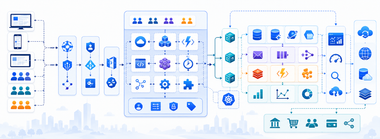
Azure SaaS Architecture: Isolation, Reliability, and Unit Economics
A practical guide to Azure SaaS architecture covering tenant identity, isolation tiers, request and job flows, deployment stamps, recovery, observability, automation, and cost per tenant.
8 min read
08 Sep 2026
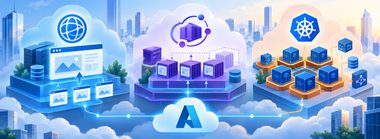
Azure App Service vs Container Apps vs AKS: Choose by Ownership
Compare Azure App Service, Container Apps, and AKS through workload shape, operational responsibility, scaling, networking, isolation, deployment, recovery, observability, and total ownership cost.
9 min read
08 Sep 2026
Azure Cloud Migration Assessment: What to Check Before Moving
Turn an Azure migration assessment into an evidence-based decision about workload boundaries, dependencies, target architecture, security, recovery, cost, and migration waves.

10 min read
08 Sep 2026
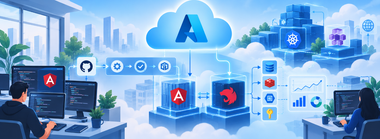
Building Angular and NestJS Applications on Azure: A Production Architecture
Design an Azure architecture for Angular and NestJS across CSR, SSG and SSR, API and worker hosting, managed identity, data, messaging, delivery, observability, and disaster recovery.
10 min read
08 Sep 2026