
Angular Development Services for Complex, Long-Lived Products
Angular Engineering for Products That Must Keep Evolving
Angular earns its place in a product when a substantial interface must coordinate many workflows, roles, forms, data views, permissions, and contributors for years. The framework supplies a coherent TypeScript application model, dependency injection, routing, forms, rendering, build tooling, and testing seams. It does not decide who owns state, how an interrupted workflow recovers, which authorization belongs on the server, or how the team prevents a shared component library from becoming a bottleneck. Those are product and engineering decisions.
We design, build, and modernize Angular applications around critical user journeys. For each journey we identify the actor, permitted action, authoritative data, local interface state, API contract, loading and failure behavior, accessibility needs, telemetry, and acceptance evidence. This keeps architecture connected to what a customer or operator must accomplish instead of turning it into a catalogue of patterns.
A responsible engagement includes delivery and ownership as well as interface code. It defines supported browsers and devices, performance budgets, security boundaries, test strategy, deployment controls, production diagnostics, documentation, and the client team’s path to independent change. The result should be an application that remains understandable when features, data, and teams grow.
Discuss the Product Constraint Before Choosing the Team Shape
Share the critical journeys, current application, architecture, APIs, evidence, incidents, roadmap, team, and release constraints. We will identify the facts needed and propose a responsible first outcome.
What We Build with Angular
Angular is well suited to SaaS workspaces, financial and operational dashboards, enterprise portals, marketplaces, internal systems, and other products where the interface expresses significant business behavior. The useful common denominator is not company size. It is the need for consistent conventions across interdependent features, predictable change across several contributors, and enough product life to repay deliberate structure.
For workflow-heavy products, we model states, transitions, validation, permissions, deadlines, drafts, conflicts, and recovery. For data-heavy interfaces, we design query boundaries, filtering, pagination or virtualization, freshness, empty and partial states, export, and progressive disclosure. For multi-tenant or regulated products, the interface must communicate scope and consequence clearly while the server remains authoritative for access and business rules.
Start with the smallest coherent journey that can be released and operated. A first slice still needs keyboard access, useful errors, observable API behavior, responsive layout, permission handling, deployment, and support diagnostics. Removing secondary screens reduces scope. Omitting the controls that make the primary journey safe merely transfers the cost to users and production support.
- SaaS workspaces: tenant-aware navigation, onboarding, roles, entitlements, configuration, usage, billing surfaces, and support access.
- Enterprise and operational systems: long-running workflows, approvals, delegation, exception queues, audit context, and role-sensitive actions.
- FinTech and analytical interfaces: dense data, trustworthy status, filters, comparison, reconciliation, exports, limits, and clear consequence.
- CRM, ERP, and workflow products: large forms, validation, drafts, dependencies, timelines, reporting, and controlled overrides.
- Customer portals and commerce: discovery, account journeys, catalogue, pricing, orders, payments, service, and responsive interaction.
- Live and collaborative applications: notifications, presence, chat, streaming data, reconnect behavior, conflict handling, and visible freshness.
Angular Services Shaped Around the Actual Constraint
- New product capabilities: discovery, interaction design, architecture, implementation, API integration, tests, telemetry, release, and handover.
- Architecture and product review: boundaries, state, contracts, security, accessibility, performance, delivery, ownership, and prioritized remediation.
- Incremental modernization: behavior characterization, migration seams, supported tooling, coexistence, controlled rollout, and legacy retirement.
- Angular upgrades and debt reduction: dependency analysis, compatibility, codemods, refactoring, test protection, and release evidence.
- Performance and experience: field and lab measurement, bundle and rendering analysis, data strategy, accessibility, SSR, and verified improvement.
- Ongoing product ownership: roadmap delivery, incidents, observability, dependency care, design-system governance, and knowledge transfer.
When Angular Is the Right Product Choice
Angular is a strong choice when a long-lived application benefits from one opinionated platform and a shared mental model. Typed templates, standalone components, dependency injection, routing, signals, RxJS interoperability, forms, and an integrated toolchain can make dependencies and change paths explicit. This is especially valuable when several teams contribute to related workflows or when business rules create more complexity than the visual layer suggests.
The same structure can become ceremony if the product is a short-lived campaign, a mostly static site, or a small interaction with little shared state. Framework selection should compare product lifetime, interaction complexity, rendering and indexing needs, team experience, hiring, ecosystem constraints, and the cost of operating the chosen architecture. Angular is not a quality guarantee; it is a set of constraints that a capable team can use well.
Architecture should preserve local reasoning. Organize code around product capabilities, give shared libraries narrow ownership, keep presentational elements separate from workflow coordination, and make state scope explicit. Prefer local state until several consumers truly share authority. Use signals, RxJS, or a store according to event and lifecycle needs rather than fashion. Enforce boundaries with the workspace structure, lint rules, tests, review ownership, and dependency visibility.
- Shared structure: one application model helps teams navigate, review, test, and change interdependent capabilities consistently.
- Type-aware contracts: TypeScript and typed templates expose many integration and refactoring errors before production.
- Reusable interaction: governed components and design tokens can encode visual, behavioral, responsive, and accessibility decisions.
- Testable boundaries: dependency injection and explicit seams support focused tests without making every test an end-to-end exercise.
- Long-term coordination: conventions and tooling reduce local invention when several teams evolve one substantial product.
Angular Delivery for Complex Products
Engineering support for complex interfaces, modernization and connected product delivery.
01
Complex SaaS and enterprise interfaces
Structured frontend engineering for workflow-heavy and data-intensive products.
02
Angular modernization and long-term development
Incremental improvements that protect ongoing product delivery.
03
Frontend, backend and Azure delivery in one team
Connected delivery across the application and its infrastructure.
Build and Modernize Through Verifiable Vertical Slices
New development and modernization both work best as vertical slices: a meaningful user outcome implemented through interface, state, API, authorization, tests, telemetry, deployment, and support. This exposes integration risk early and creates evidence that stakeholders can review. A layer-by-layer plan can report activity for months while postponing the first proof that the system works.
For an existing application, begin by characterizing behavior before changing it. Map routes, feature boundaries, state ownership, API contracts, dependency versions, build and release paths, test coverage, runtime errors, performance traces, accessibility failures, and recurring support work. Then choose seams that let old and new code coexist. Upgrade the toolchain in controlled steps, replace one capability at a time, and measure regressions against named journeys.
Acceptance should be observable: a defined workflow succeeds for authorized users and fails safely for others; performance remains within a budget on representative devices and data; keyboard and assistive-technology paths work; telemetry distinguishes client, network, API, and business failures; and deployment can be rolled back or repaired. Demonstrations matter, but repeatable evidence makes progress durable.
- Establish evidence: inspect journeys, code, dependencies, design, APIs, runtime behavior, incidents, delivery, owners, and constraints.
- Bound the first result: define capability and trust boundaries, state, contracts, acceptance, migration, responsibilities, and release controls.
- Deliver a vertical slice: implement interface, state, API behavior, authorization, errors, tests, telemetry, and operator support together.
- Validate representative behavior: exercise access, failure, recovery, accessibility, performance, devices, integration, and release paths.
- Operate and transfer ownership: measure journeys, learn from production, maintain dependencies, improve the next constraint, and share judgment.
Choose the Angular Stack from Product Responsibilities
The stack follows responsibilities. Angular and TypeScript provide the application foundation; signals and RxJS cover different forms of reactive state and asynchronous coordination; a design system establishes reusable interaction and accessibility contracts. REST, GraphQL, WebSocket, or events are selected from consumer needs, freshness, caching, failure semantics, and operational cost. Server rendering or prerendering is useful where discovery, first response, and public routes justify its lifecycle and hosting complexity.
Performance begins with measurement. Establish budgets for initial JavaScript, route chunks, key render milestones, interaction latency, memory, and API time. Profile change detection, long tasks, subscriptions, images, third-party scripts, tables, forms, and repeated requests on representative hardware. Then apply route-level loading, sensible preloading, image policy, virtualization, memoized derivation, request cancellation, caching with explicit freshness, and server or query improvements where evidence points.
Security crosses the browser boundary. Keep authorization and sensitive business decisions on the server; protect tokens, sessions, redirects, file handling, and external navigation; encode output by context; apply a restrictive content security policy where feasible; govern dependencies and build provenance; and avoid sending secrets or unnecessary personal data to analytics and logs. Accessibility, internationalization, observability, CI/CD, and Azure cloud delivery belong in the product design rather than a release-week checklist.
Judge an Angular Partner by the System It Leaves Behind
Evaluate an Angular partner by decisions and evidence, not framework vocabulary. Ask how the team finds a capability boundary, distinguishes local from shared state, tests permissions and failure paths, measures performance on realistic devices, handles accessible interaction, upgrades dependencies, diagnoses production errors, and transfers ownership. Strong answers name trade-offs, limits, and verification methods.
Delivery should leave client-controlled repositories and environments, current architecture decisions, a governed design system, typed API contracts, meaningful automated checks, traceable releases, useful frontend telemetry, runbooks, and engineers who understand the code. Documentation should explain why boundaries exist and how to operate them, not repeat syntax. Pairing, review, demonstrations, and shared incident analysis transfer judgment more effectively than a final handover meeting.
GARNO.TECH can own a bounded frontend result or work across Angular, NestJS, data, integrations, and cloud delivery when one product team is the responsible model. The team shape should follow the product boundary and existing capability. More developers increase throughput only when decisions, design, APIs, review, environments, and acceptance can keep pace.
Start with a Bounded Outcome, Not a Staffing Number
Begin with the business outcome and the present constraint. A useful brief identifies users, critical journeys, current behavior, code and framework versions, API ownership, design maturity, supported environments, security or regulatory obligations, performance evidence, release process, incidents, internal decision makers, and the date or event that creates urgency.
The first engagement may be a technical and product assessment, a performance investigation, an accessibility repair, a controlled version upgrade, a modernization slice, a new capability, or added engineering capacity with explicit ownership. Estimate the outcome as a range with assumptions, exclusions, dependencies, risks, confidence, and acceptance evidence. Screen count alone says little about workflow states, data, integrations, permissions, or recovery.
The smallest responsible start is one that reduces a named uncertainty or delivers a production-worthy journey. It should produce facts the next decision can use: measured bottlenecks, mapped boundaries, a proven migration seam, an accessible component contract, a released vertical slice, or a team that can continue independently.
When Companies Bring in Our Angular Team
We help product and engineering teams when an Angular application has become critical to the business, but delivery capacity, architecture or frontend quality is holding the roadmap back.
01
A new complex product
Build a maintainable Angular foundation for a SaaS platform, customer portal, dashboard or internal enterprise system.
02
An existing team needs senior capacity
Add experienced Angular engineers who can work inside an established codebase, process and release cycle.
03
Legacy Angular slows delivery
Plan and execute framework upgrades, architecture modernization and technical-debt reduction without treating a full rewrite as the default.
04
Performance affects users
Improve loading, rendering, large data views, forms, change detection and runtime behavior using measured bottlenecks.
Additional Reasons to Bring in Our Angular Team
We also help when architecture and integrations make safe product delivery harder.
01
Frontend architecture no longer scales
Clarify boundaries, shared components, state management, permissions and testing so multiple teams can ship safely.
02
The product needs reliable integrations
Connect Angular applications to APIs, payments, identity providers, real-time services and complex business workflows.
Angular Development Services
Choose a focused engagement for one technical problem or involve GARNO.TECH in the complete frontend lifecycle, from architecture and implementation to release and continuous improvement.
01
Custom Angular Application Development
Frontend development for SaaS products, FinTech platforms, portals, dashboards, marketplaces and workflow-heavy business applications.
02
Angular Team Extension
Senior Angular engineers who join an existing product team and follow its architecture, tooling, code-review and delivery process.
03
Angular Migration and Version Upgrades
Assessment, dependency planning, incremental upgrades, deprecated API replacement, regression control and production-safe rollout.
04
Angular Architecture and Refactoring
Module and domain boundaries, component strategy, state management, design systems, permissions, shared libraries and technical-debt reduction.
Additional Angular Development Services
Focused engineering support for performance, quality and continuous product development.
01
Angular Performance Optimization
Profiling and improvement of initial loading, rendering, large tables, forms, change detection, data flows and bundle delivery.
02
Testing, Maintenance and Product Development
Automated testing, bug fixing, dependency maintenance, release support and ongoing development of product features.
Use Product Evidence to Evaluate Angular Experience
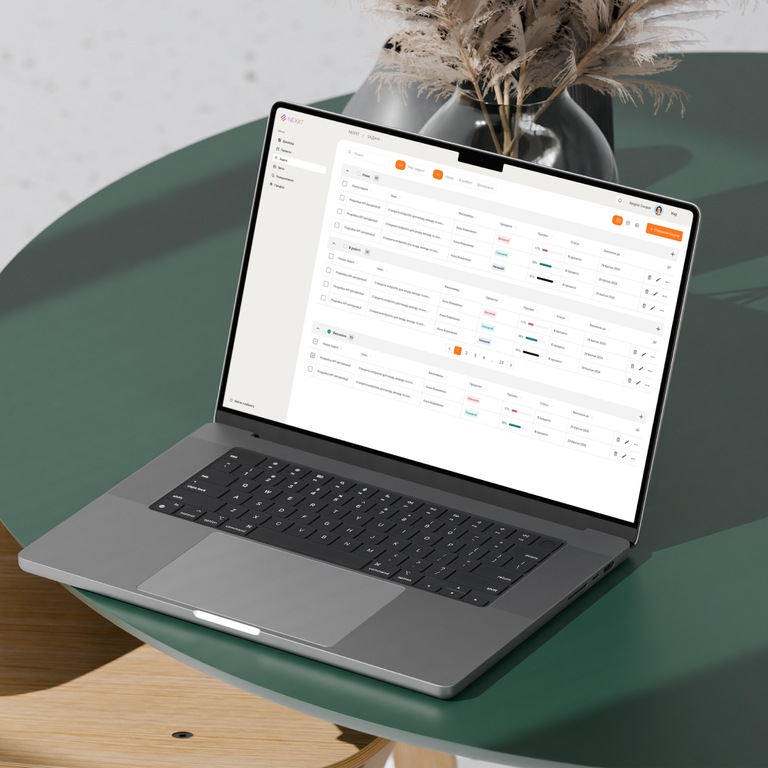
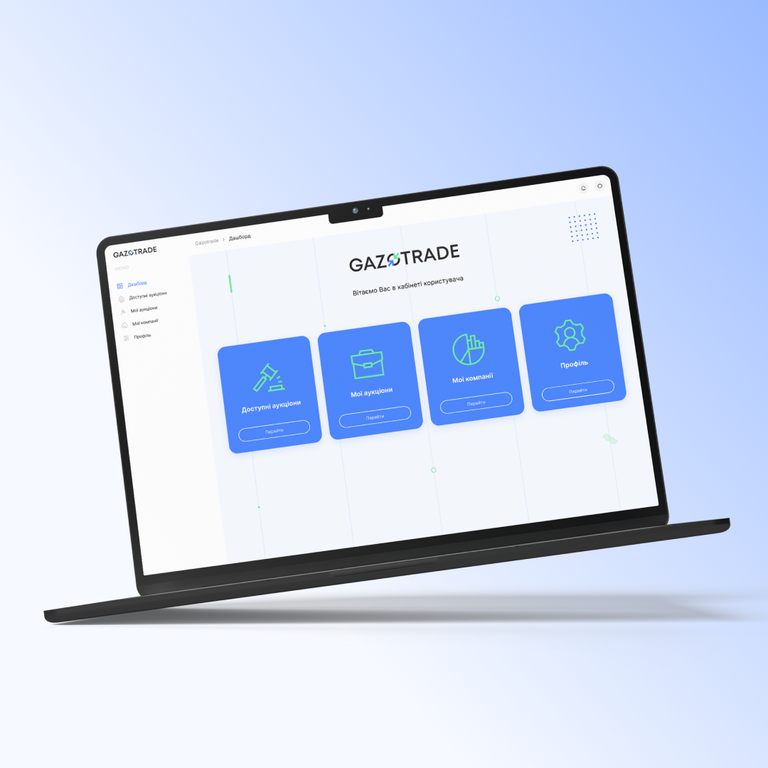
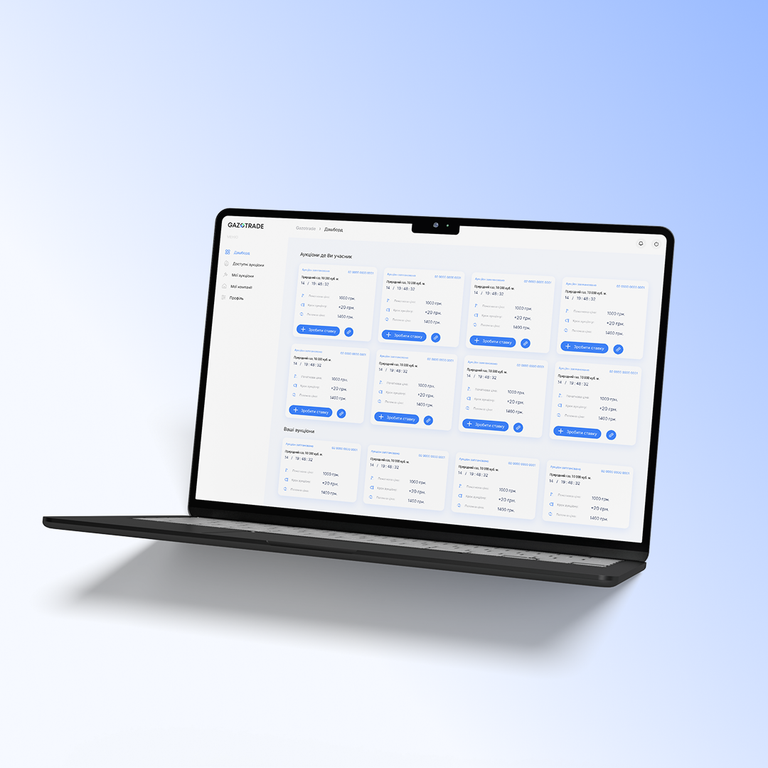
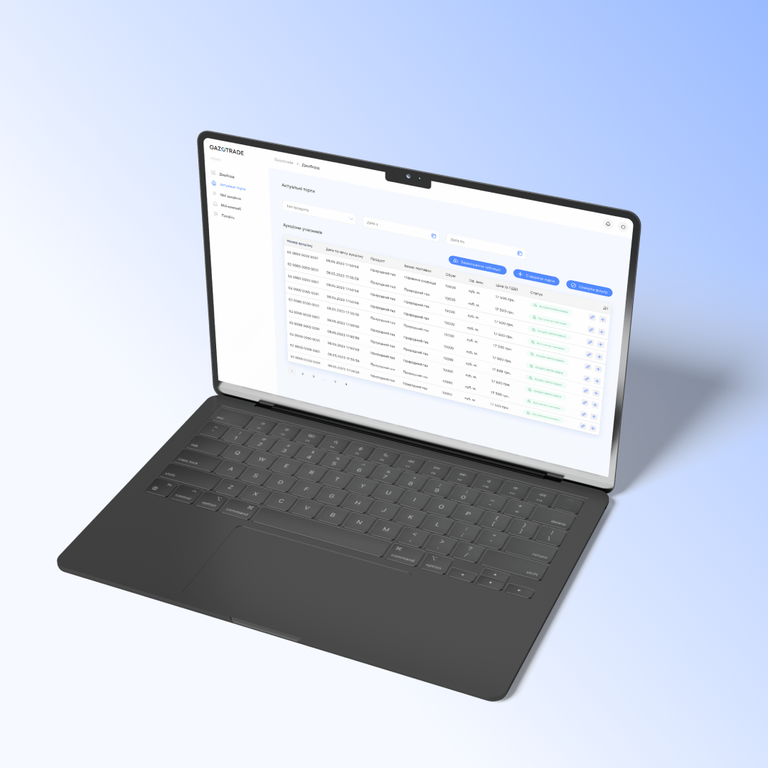
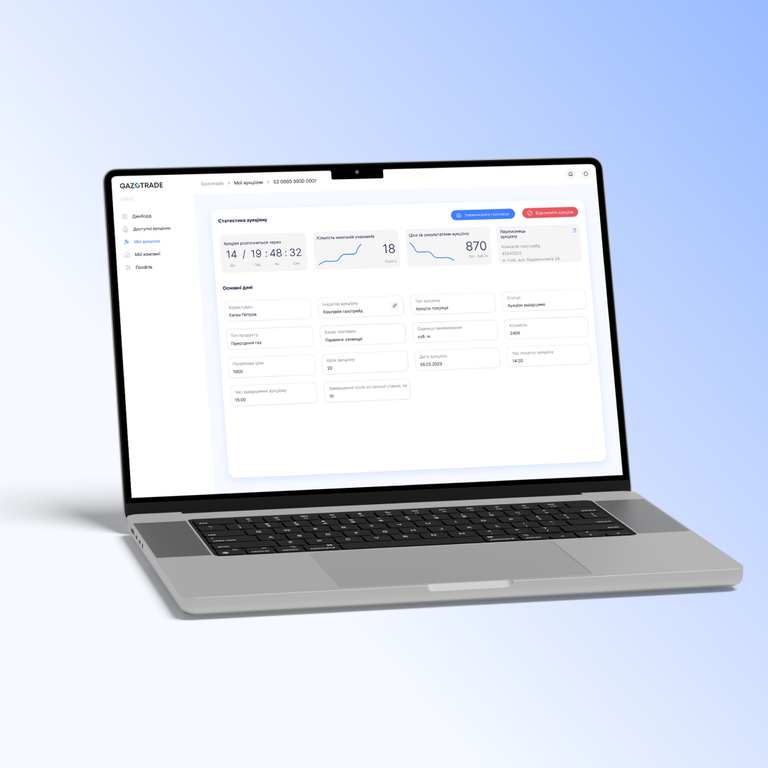
Our linked work includes data-rich SaaS and role-sensitive business products where frontend architecture, complex workflows, integrations, and operational reliability are central. Read each case for the capabilities its record actually demonstrates. A technology label does not prove a particular scale, conversion improvement, compliance status, or performance result.
For a new engagement, the most relevant evidence comes from the product itself: repository and dependency analysis, design and route maps, runtime errors, browser traces, API traffic, accessibility audits, user research, support cases, deployment history, and business objectives. These facts reveal whether the next valuable step is architectural, experiential, operational, or organizational.
Experience becomes credible when it produces maintainable boundaries, predictable releases, measurable user journeys, controlled migrations, recoverable failures, and transparent ownership. Those outcomes matter after the original developers leave, which is why they are a better standard than a list of libraries.



Ways to Work with Our Angular Team
The first step is a short technical discussion to understand the product, current codebase, team structure, constraints and expected outcome. We then recommend the smallest responsible engagement.
01
Senior Angular Engineer
Add focused senior capacity to an existing team, backlog and delivery process.
02
Dedicated Angular Team
Use a stable frontend team for continuous product development, modernization and release ownership.
03
Scoped Angular Project
Assign a defined migration, audit, performance initiative or application module with agreed deliverables.
Choose the Smallest Angular Engagement That Resolves a Real Risk
Start with a focused review of the desired outcome, code, runtime, user experience, dependencies, ownership, and acceptance. The answer may be an assessment, production repair, upgrade, modernization slice, new capability, or added capacity.
Engineering Angular Applications for Long-Term Change
Architecture and delivery practices that keep complex Angular products maintainable as requirements and teams evolve.
01
Clear application boundaries
Domain-focused structure keeps features, shared UI and business logic understandable as the product grows.
02
Predictable data flows
Signals, RxJS and state-management patterns are selected according to actual application complexity rather than fashion.
03
Quality built into delivery
Code review, automated tests, linting, typed API contracts and controlled releases reduce regression risk.
04
Frontend connected to the whole product
Architecture decisions consider NestJS backend development, authentication, security, analytics, deployment and observability with Azure cloud development.
How Angular Work Moves from Evidence to Production
- /01Understand the Product and RuntimeReview critical journeys, users, code, design, state, APIs, dependencies, devices, telemetry, incidents, release flow, owners, and constraints.
- /02Define the Boundary and AcceptanceAgree the first outcome, architecture and trust boundaries, contracts, performance and accessibility targets, migration path, responsibilities, and proof.
- /03Implement a Reviewable Vertical SliceDeliver interface, workflow state, API integration, permission behavior, tests, telemetry, deployment, and support diagnostics as one coherent increment.
- /04Verify Real Conditions and ReleaseTest representative data, roles, failure and recovery, browsers, devices, keyboard and assistive technology, performance budgets, deployment, and rollback.
- /05Operate, Learn, and Transfer OwnershipMeasure user journeys, analyze incidents and support, maintain dependencies, improve the next constraint, and transfer access, decisions, and knowledge continuously.
Angular Engineering Stack
A grouped view of the verified technologies and quality practices used to deliver Angular products.
01
Frontend
Angular, TypeScript, RxJS, Signals
02
UI
Angular Material, custom design systems, responsive interfaces
03
APIs
REST, GraphQL, WebSocket
04
Quality
Unit testing, integration testing, end-to-end testing, linting, code review
Connected Angular Delivery Stack
Verified backend, data and delivery technologies used with Angular products.
02
Data
PostgreSQL, MySQL, MongoDB, Redis
Angular Development FAQ
Can your Angular engineers join an existing product team?
Can your Angular engineers join an existing product team?
Can an older Angular application be upgraded without a complete rewrite?
Can an older Angular application be upgraded without a complete rewrite?
Do you provide both Angular and backend development?
Do you provide both Angular and backend development?
What products are a strong fit for Angular?
What products are a strong fit for Angular?
How do you approach Angular performance and accessibility?
How do you approach Angular performance and accessibility?
How do you estimate an Angular engagement and who owns the result?
How do you estimate an Angular engagement and who owns the result?




Angular Engineering Insights
Build an Angular Product Your Team Can Continue to Own
Describe what you are building, modernizing, or trying to stabilize. GARNO.TECH can define the boundary, delivery evidence, production controls, and knowledge transfer for a practical next step.
Publications
Our research
Research and development of AI-powered solutions to optimize business workflows and enhance decision-making processes.
Analysis of machine learning models for predictive analytics in finance, e-commerce, and SaaS platforms.
Exploration of natural language processing and computer vision technologies to strengthen automation, personalization, and customer support.
Scaling Angular Applications as Products and Teams Grow
Scale an Angular product through domain boundaries, deliberate state, performance evidence, accessible design, safe delivery, and routine modernization.

9 min read
04 Aug 2026
How to Evaluate an Angular Development Partner
A practical framework for selecting an Angular partner through product fit, production evidence, architecture, testing, accessibility, security, delivery controls, team integration, lifecycle economics, ownership, and exit.

8 min read
31 Jul 2026
When Angular Is the Right Choice for Your Platform
Evaluate Angular against workflow complexity, team ownership, rendering, performance, ecosystem, accessibility, security, upgrade horizon, and total delivery cost.
8 min read
30 Jul 2026