/ 01
Engineer the Operating Model
Translate users, roles, workflows, decisions, data, exceptions, and support work into a coherent product instead of assembling generic pages around a database.
Custom web development earns its cost when the software must encode a business advantage, a distinctive operating model, or constraints that a configurable product cannot own safely. The result is not merely a collection of screens. It is a working system of users, permissions, decisions, data, integrations, background processes, operational controls, and evidence.
Start with the value flow. Who enters the system, what are they trying to accomplish, which facts are authoritative, which transitions are allowed, which institution or external provider participates, and what happens when work is delayed, duplicated, denied, or only partly completed? A strong scope connects the customer journey to the backoffice work required to support it.
Our verified experience includes SaaS and FinTech platforms, customer and partner portals, administrative interfaces, and integration-heavy workflows. We combine Angular product interfaces, NestJS services, and Azure delivery where they fit the workload. Technology follows the product boundaries, team capability, and lifecycle rather than defining the brief. See relevant cases.
Custom does not mean rebuilding commodity capabilities without reason. Evaluate identity, content management, payments, search, messaging, analytics, document signing, and infrastructure as build, buy, or integrate decisions. Compare functional fit, security and compliance scope, data ownership, extensibility, service limits, total cost, vendor health, operational burden, and exit constraints. Own the differentiating workflow and the contracts around suppliers. A purchased service can shorten delivery while still requiring careful authorization, failure handling, reconciliation, support, and migration design.
Success also needs measurable product and operating outcomes. Define completion and abandonment for critical journeys, time and error budgets, support volume, manual work, data-quality checks, accessibility, security and recovery objectives, and the evidence required before wider rollout. A feature count does not reveal whether users complete the job, operators can explain exceptions, or the system can survive change.
We build SaaS products, customer and partner portals, administrative and internal systems, marketplaces, financial and operational tools, and platforms shaped by multiple external services. The common characteristic is durable business behavior: the application must remain understandable as roles, rules, markets, data volumes, integrations, and teams change.
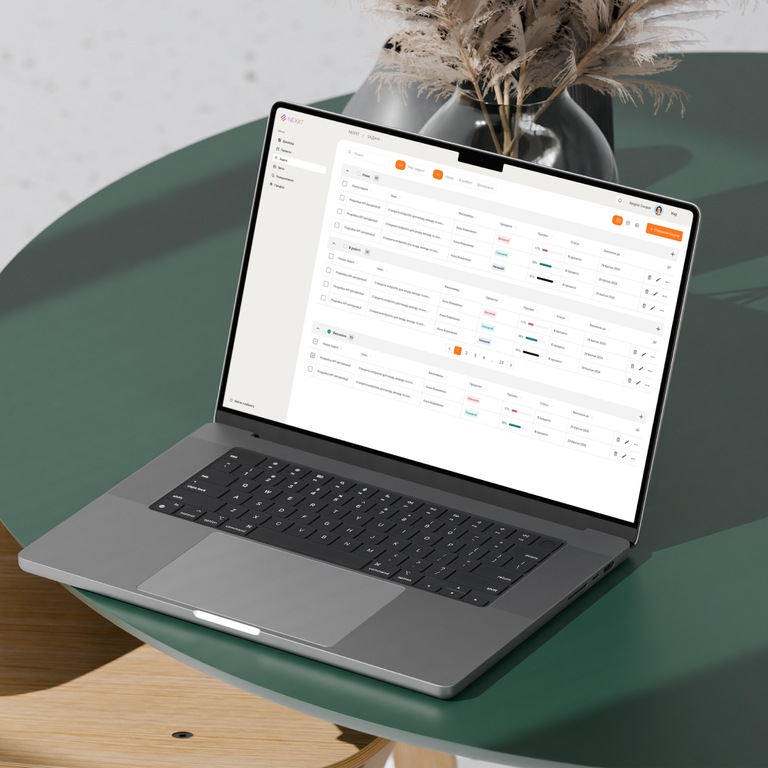
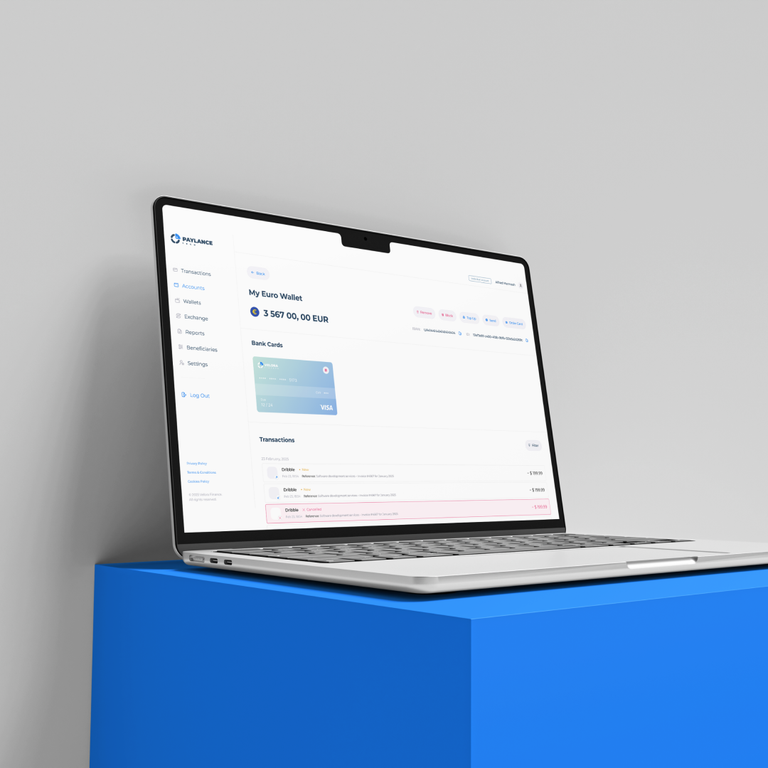
A customer portal may include onboarding, account state, plans, orders, documents, payments, support, notifications, and consent. Its operations interface needs search, queues, exception handling, controlled overrides, approvals, exports, audit history, and links from a visible outcome to the evidence behind it. Treating the backoffice as an afterthought usually moves product complexity into spreadsheets, support chats, and direct database access.
A multi-tenant SaaS platform adds tenant lifecycle, membership, object authorization, configuration, usage measurement, billing, limits, data isolation, support access, export, retention, and deletion. A marketplace adds supply and demand workflows, moderation, pricing, availability, fulfillment, disputes, payouts, and reconciliation. An integration-heavy platform must define authority, mapping, retries, duplicate events, rate limits, provider outages, and the status shown while an external result remains unknown.
The first release should be the smallest coherent capability that can be operated responsibly. It still needs honest state, permissions, failure recovery, monitoring, support tools, data protection, and a release path. Cutting a secondary feature reduces scope; omitting the controls required to explain or recover the primary workflow merely postpones cost until production.
Clients involve us to shape and deliver a new product, recover a stalled initiative, modernize a legacy system, replace a provider, add senior engineering capacity, or resolve a specific architecture, reliability, security, performance, or delivery constraint. The responsible response begins with evidence, because the visible symptom is not always the underlying problem.
For a new product, discovery validates the users, workflow, market assumptions, business rules, integrations, data and trust boundaries, operating model, and acceptance evidence. We identify decisions capable of changing cost or architecture and test them through documentation, provider conversations, prototypes, or production-shaped technical proofs before scaling the team.
For an existing product, we inspect runtime behavior, code boundaries, data ownership, tests, environments, deployments, incidents, dependencies, access, and operational workarounds. Modernization usually works best as controlled increments: place a stable contract around a capability, make behavior observable, add characterization tests, migrate data or traffic gradually, compare old and new outcomes, and define exit criteria before removing the legacy path.
A full rewrite is justified only when evidence shows that incremental change is less safe or economical. Likewise, adding engineers helps only when product decisions, architecture, access, review, and acceptance have owners. We make assumptions and constraints visible so the proposed engagement addresses the actual bottleneck rather than increasing activity around it.
Focused discovery is appropriate when the next decision is unclear. It produces workflow and boundary maps, risks, unresolved questions, architecture options, delivery assumptions, and a staged recommendation. The goal is not a ceremonial specification; it is enough evidence to decide whether and how to invest.
Dedicated senior engineers add a defined capability—frontend, backend, cloud, QA, architecture, or technical leadership—to an existing team. This model needs a named product owner, accessible code and environments, review responsibility, measurable outcomes, and a plan for knowledge transfer. Capacity without integration creates a parallel team and delayed decisions.
A product team owns a coherent end-to-end increment across product analysis, UX, engineering, QA, infrastructure, and launch readiness. A modernization project takes responsibility for a bounded capability, provider, migration, or operating risk while maintaining compatibility with the rest of the system.
Choose the smallest engagement that can resolve the next material uncertainty or deliver one responsibly operable outcome. Define ownership of source, accounts, environments, data, architecture decisions, third-party contracts, acceptance, and support before work starts. Expand scope when the preceding increment supplies evidence, not merely because a calendar milestone arrived.
Ownership is proven when the client can access the repositories and environments, trace a release, understand critical decisions, operate routine workflows, respond to a documented incident, restore essential data, and continue development without dependence on one hidden individual.
Frontend, backend, data, integrations, cloud, security, and operations form one product system. The interface expresses roles, decisions, latency, and failure; the API enforces object-level authority and domain transitions; the data model preserves authoritative facts; integrations translate external uncertainty; and delivery determines whether change can reach users safely.
With Angular, we structure product areas around clear routes, state ownership, typed API contracts, accessible interaction, and measured performance. With NestJS, controllers remain transport boundaries while application services own use cases, domain modules own rules, and adapters isolate databases and providers. Relational transactions protect authoritative state; queues handle justified asynchronous work with idempotency, bounded retry, and owned failure.
On Azure, the platform is designed from workload and operational objectives: managed identity, secret isolation, network and data boundaries, traceable infrastructure, compatible database migrations, immutable artifacts, controlled exposure, observability, backup, restore, and recovery. Managed services reduce undifferentiated work, but they do not decide product availability, incident authority, or acceptable data loss.
Quality follows the architecture. Tests cover business rules, permissions, contracts, integration failure, concurrency, migration, restore, and critical user journeys. Telemetry connects a customer-visible outcome to safe technical evidence. Releases use progressive exposure and tested rollback or feature control. Documentation records decisions, boundaries, runbooks, and ownership. Relevant web scopes can also connect to SaaS development or FinTech development where their domain constraints apply.
Production readiness is a demonstrated capability, not a deployment date. Before wider exposure, prove environment and configuration ownership, least-privilege access, secret rotation, database compatibility, monitored business and technical signals, useful support paths, incident authority, feature control or rollback, backup and restore, and recovery of incomplete work. Rehearse one bad release and one unavailable dependency. After launch, compare service objectives and product outcomes with assumptions, then use incidents, support evidence, and performance data to choose the next increment.