/ 01
Launch a Financial Product Responsibly
Turn a verified customer and money flow into the smallest coherent product that includes transaction controls, operations, reconciliation, support evidence, and a safe production rollout.
Payment platforms · wallets and accounts · KYC/KYB · provider integrations · transaction operations
A financial product is a chain of promises: money moves once, balances remain explainable, identity decisions are traceable, access is constrained, provider failures are contained, and operators can recover without guessing. We design and build FinTech systems around those promises rather than treating payments as another CRUD workflow.
Start with the actual movement of value. Identify the customer, merchant, operator, licensed entity, bank, processor, scheme, identity provider, and settlement party; then trace authorization, capture, transfer, fee, refund, reversal, dispute, payout, and reconciliation. For every step, name the authoritative record, expected timing, failure owner, evidence, and customer-visible outcome. This map determines architecture, scope, controls, and the safest route to launch.
Product policy must become executable behavior. Define eligibility, limits, fees, holds, approval thresholds, velocity controls, refund authority, dispute timing, account restriction, manual override, and customer communication as versioned rules with named owners. Separate policy decisions from provider mechanics so a vendor change does not silently alter the promise to users. Record which rule and evidence produced every material decision, while avoiding the collection of data that has no justified purpose.
Before launch, agree on measurable gates: successful and ambiguous transaction rates, reconciliation completeness, exception age, support response, fraud and loss thresholds, availability, recovery time, data-quality tolerances, and provider service levels. Assign authority to pause a flow or provider, define degraded modes, and rehearse how operators protect customers while facts are incomplete. A launch is responsible when the team can detect a broken promise, contain its impact, explain the affected records, and restore controlled service.
We build customer onboarding, KYC and KYB case flows, payment orchestration, wallets and account views, transfers, card and bank-payment journeys, fees, payouts, refunds, disputes, notifications, reporting, provider portals, and operational backoffices. The useful boundary is a complete business capability with one accountable owner, not a list of screens or vendor endpoints.
New products need the smallest coherent launch slice. That may include one market, one funding and payout path, a narrow customer segment, manual review, explicit limits, and enough operations tooling to investigate every exception. A thin interface without reconciliation, permissions, support controls, and recovery is not an MVP; it is an unpriced operational liability.
Modernization begins by preserving truth while changing implementation. We can isolate a provider behind a stable domain contract, replace a brittle integration, extract a ledger or workflow, rebuild an operator console, reduce sensitive-data scope, or migrate a legacy platform in observable stages. Compatibility, dual running, record comparison, rollback, and customer continuity belong in the design from the first increment.
Every money-moving command needs a business identity and an explicit state machine. “Failed” is rarely one state: a request may be rejected before submission, accepted but unacknowledged, pending with a provider, completed externally but not recorded internally, reversed later, or awaiting manual review. Model legal transitions and terminal states, preserve provider references, and make ambiguous outcomes visible to operations.
Idempotency prevents a retry from becoming a second economic action. Scope the key to the actor and operation, bind it to a request fingerprint, persist the result, and reject reuse with different inputs. Webhook handlers must authenticate the source, tolerate duplicate and out-of-order delivery, and update state conditionally. Timeouts mean “unknown,” not “failed”; query authoritative status before compensating or submitting again.
Keep balances and transaction history explainable. A ledger should use immutable postings, balanced entries, explicit currencies and precision, and corrections through new entries rather than mutation. Reconciliation compares internal records with processor, bank, scheme, or custody records on a defined cadence. Differences need classification, owner, aging, materiality, evidence, and controlled repair. Dashboards without a resolution workflow merely visualize financial uncertainty.
Security begins with scope. Classify cardholder data, personal data, identity evidence, credentials, financial records, and operational evidence; then minimize collection, retention, copies, and human access. Tokenization or provider-hosted payment components may reduce exposure, but only a documented data-flow review establishes the real boundary. Encrypt transport and stored data, manage keys separately, redact telemetry, and make deletion and legal retention deliberate.
Authorize every business object and action on the server. A role name alone is insufficient for accounts, tenants, transactions, refunds, documents, and support tools; policies must check the relationship and allowed transition. Protect privileged operations with stronger authentication, separation of duties, dual approval where justified, limits, and tamper-evident audit records. Test abuse cases such as object-ID substitution, mass assignment, replay, enumeration, excessive data response, webhook forgery, and support-account misuse.
Compliance is a product-specific constraint, not a badge supplied by a development team. The client and qualified legal, compliance, security, and regulated partners determine applicable licensing, AML, sanctions, consumer, privacy, reporting, PCI DSS, and operational-resilience obligations. Engineering translates that control matrix into architecture, evidence, tests, supplier records, incident procedures, access reviews, and change controls. Requirements must be mapped to an owner and proof, then revisited as markets and providers change.
Our delivery stack combines Angular product and operations interfaces, NestJS APIs and workers, and Microsoft Azure infrastructure. Technology follows the workload: clear domain modules before distributed services, relational transactions for authoritative financial state, durable messaging for asynchronous work, object storage for documents, and managed cloud services where they reduce undifferentiated operations.
We ship small, observable slices through infrastructure as code and controlled CI/CD. Each artifact is immutable and traceable to source, review, tests, dependencies, configuration, and deployment. Database changes remain compatible across rolling releases. Secrets stay outside source and images; workload identities replace long-lived credentials where supported. Production access is scoped, time-bounded where possible, reviewed, and recorded.
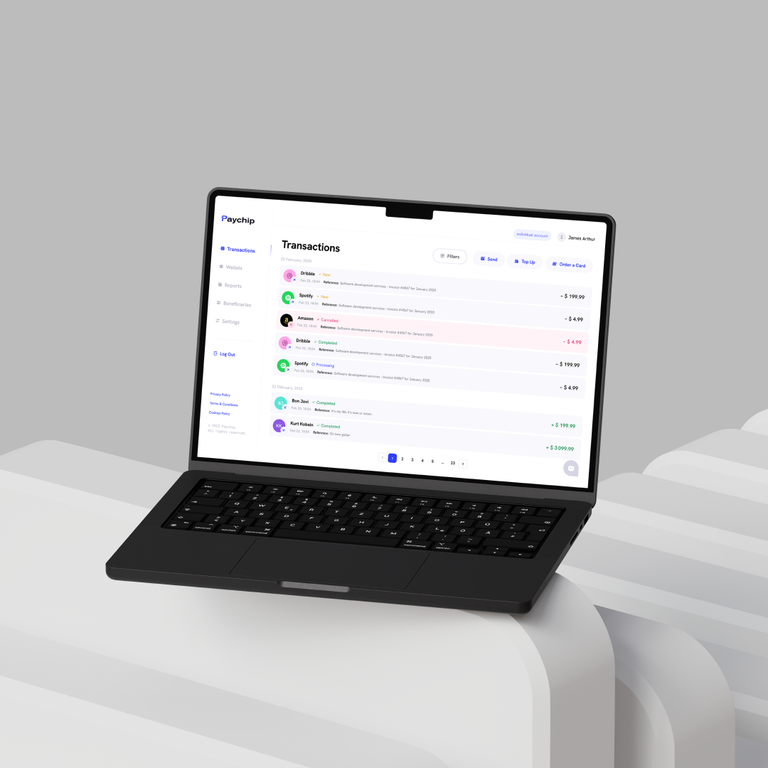
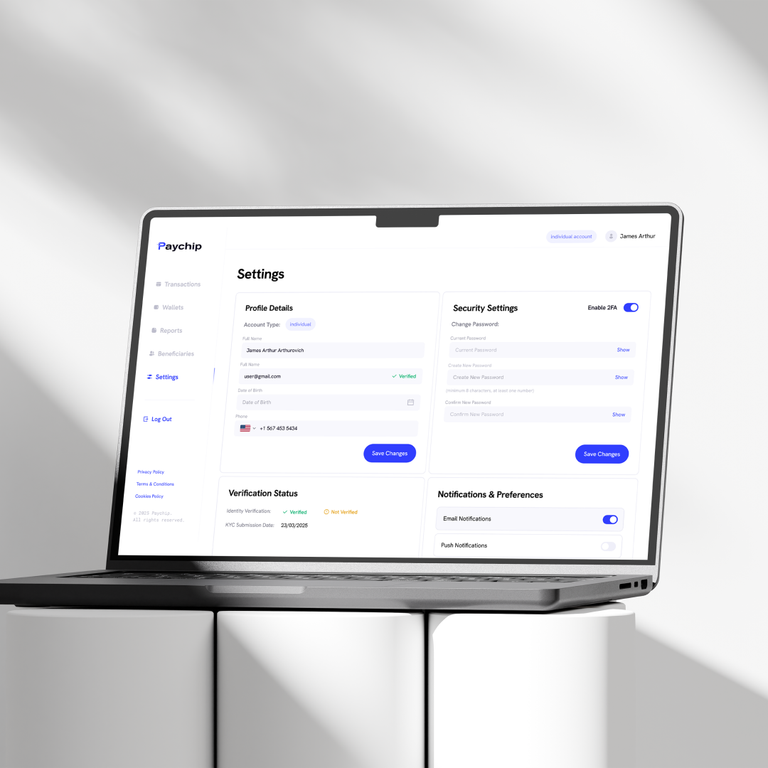
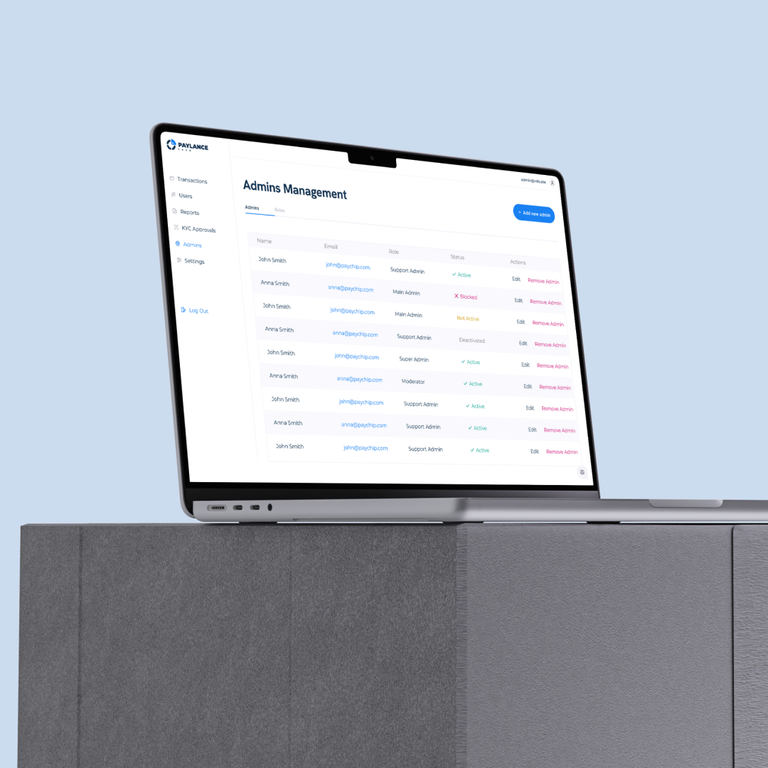
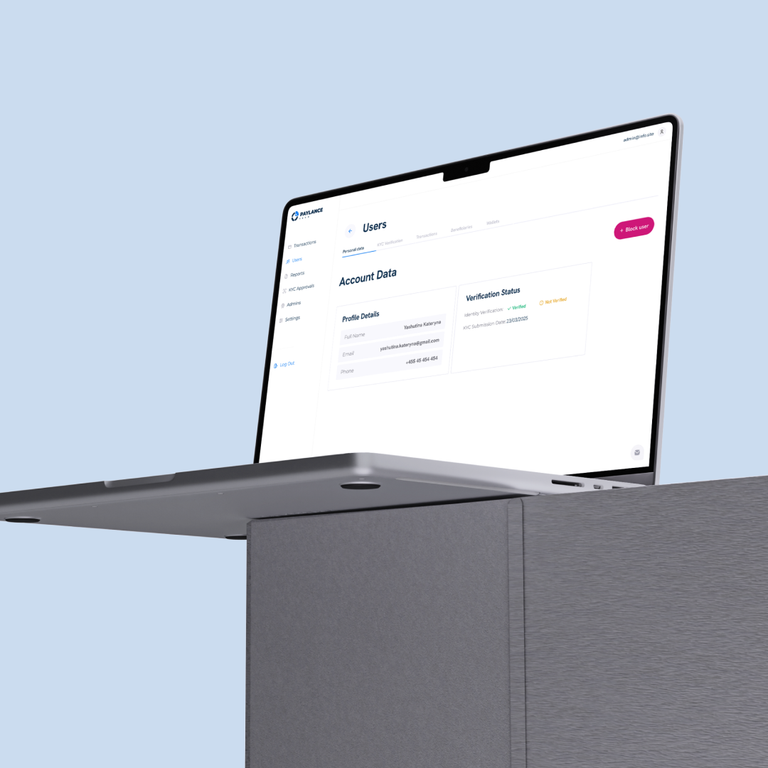
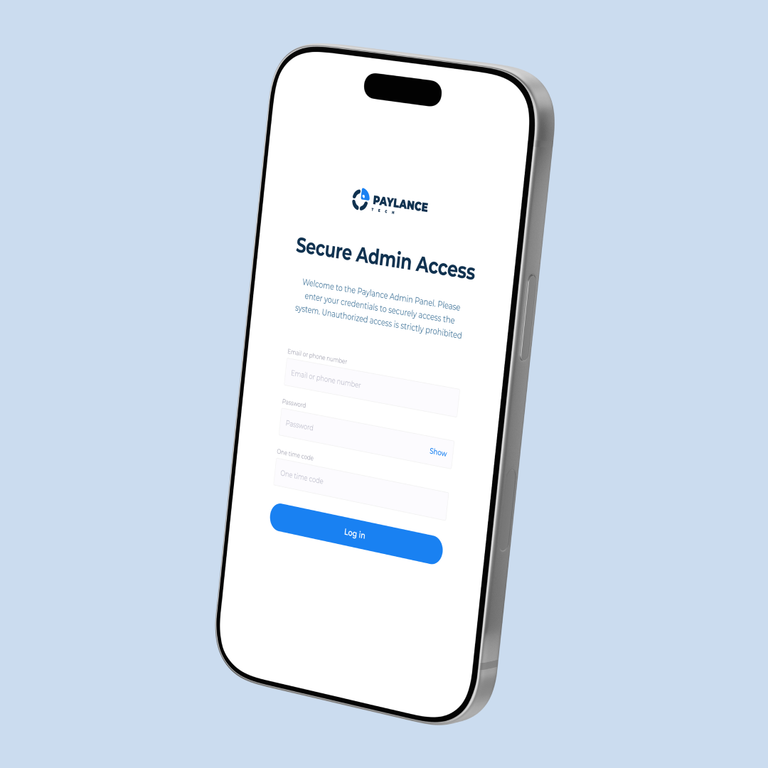
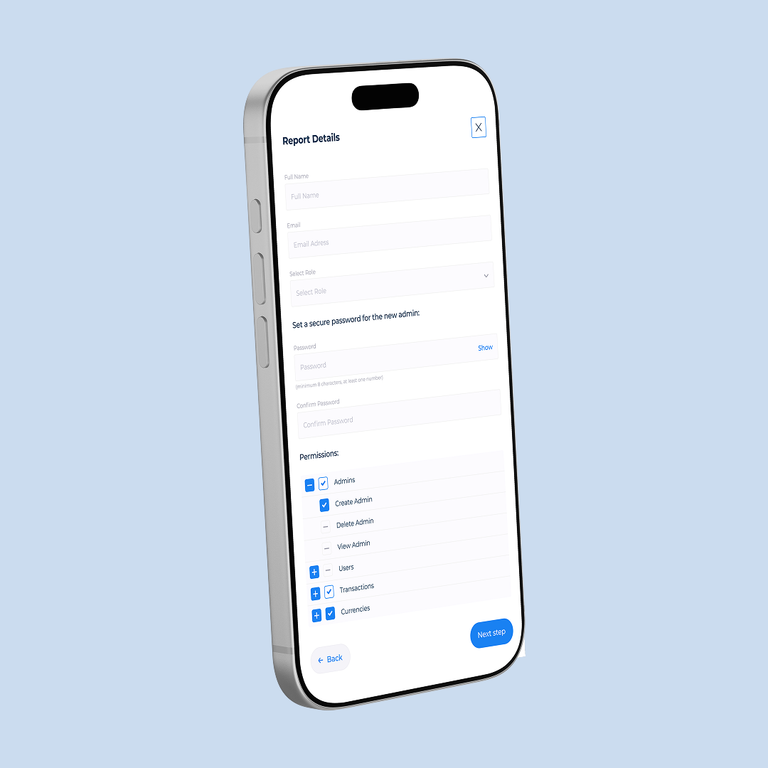
Quality evidence covers permission boundaries, state transitions, idempotency, concurrency, webhook authenticity, duplicate and reordered events, provider timeouts, reconciliation, limits, data migration, backups, and recovery. Telemetry follows a transaction without logging sensitive values. Alerts measure customer outcomes, processing age, mismatches, authorization failures, saturation, and provider degradation. Relevant product flows can be seen in our PayChip, Paylance, and Bonum 24 work.
New product delivery: take a defined customer and money flow from discovery through architecture, provider integration, implementation, operational readiness, and a controlled launch. The first release includes the controls and support tooling needed to explain and recover its financial state.
Integration or modernization: replace a payment, banking, identity, or reporting provider; repair a fragile workflow; reduce sensitive-data scope; improve reconciliation; or migrate a legacy capability in stages. We define compatibility and exit criteria before moving production traffic.
Senior team extension: add experienced architecture, backend, frontend, cloud, QA, or technical leadership to a product team with clear ownership and measurable outcomes. This works when the client retains product and compliance authority but needs deeper execution capacity.
Whichever model fits, the first output is evidence: flow and boundary maps, unresolved decisions, provider dependencies, control obligations, delivery risks, and a staged scope. Estimates state assumptions and confidence rather than hiding uncertainty in one precise number. Engagement expands only when the next increment has a clear result, owner, and acceptance test.
Share how value moves, who the users and regulated parties are, which providers and markets apply, where the current system fails, and what launch or modernization outcome you need. We will identify the critical boundaries and propose the smallest responsible next step.