/ 01
Explicit Tenant Boundary
Choose shared, schema, database or hybrid isolation from sensitivity, contract, residency, noisy-neighbour, restore, customization and operating constraints—and test every access path.
A SaaS backend is not a collection of CRUD endpoints. It is the authority for tenant boundaries, users and permissions, subscription and entitlement state, business workflows, integrations, background work, audit evidence, data lifecycle, and the failures customers cannot see. NestJS supplies modules, dependency injection, transport adapters, guards, pipes, interceptors, filters and testing seams that can make those responsibilities explicit. The framework does not choose the boundaries or guarantee their correctness.
Begin with the operating model. Define who the tenants are, whether users belong to several organizations, which data and configuration belong to whom, how plans change capabilities, which actions require approval, how third-party outcomes arrive, what must be auditable, and which service objectives matter. Then design a small production-shaped slice through identity, policy, data, integration, telemetry and recovery. Architecture should preserve the rules the business depends on while giving the team an affordable way to change them.
Nest modules can align code with product capabilities such as organizations, identity, catalog, orders, billing, support, reporting and integrations. A module should expose a narrow application API and keep its rules, data access and events behind that boundary. Controllers and message handlers translate transport concerns; application services coordinate use cases; domain logic protects invariants; adapters connect persistence and providers. Dependency injection makes relationships replaceable and testable, but careless global providers and circular imports can turn the module graph into hidden coupling.
Use the same business operation from HTTP, GraphQL, a queue or a scheduled job rather than duplicating rules in every handler. Put validation, authentication context, authorization, idempotency and observability at deliberate layers. Keep framework decorators near delivery edges where practical so core policy can be tested without starting the application. Record important architecture decisions and reject generic abstractions until two real use cases prove the variation. NestJS is valuable when its structure makes ownership and failure visible, not when every class receives a decorator.
Model a business process as states, allowed transitions, actors, policy, timestamps, evidence and exceptional paths. An onboarding case may move through invited, identity pending, review, approved, rejected, suspended and closed states. An invoice may be drafted, issued, paid, overdue, voided or credited. Define who may cause each transition, the tenant and record context required, side effects, notifications, audit entry and safe retry. A generic update endpoint that accepts arbitrary status changes bypasses the product model and makes incidents difficult to reconstruct.
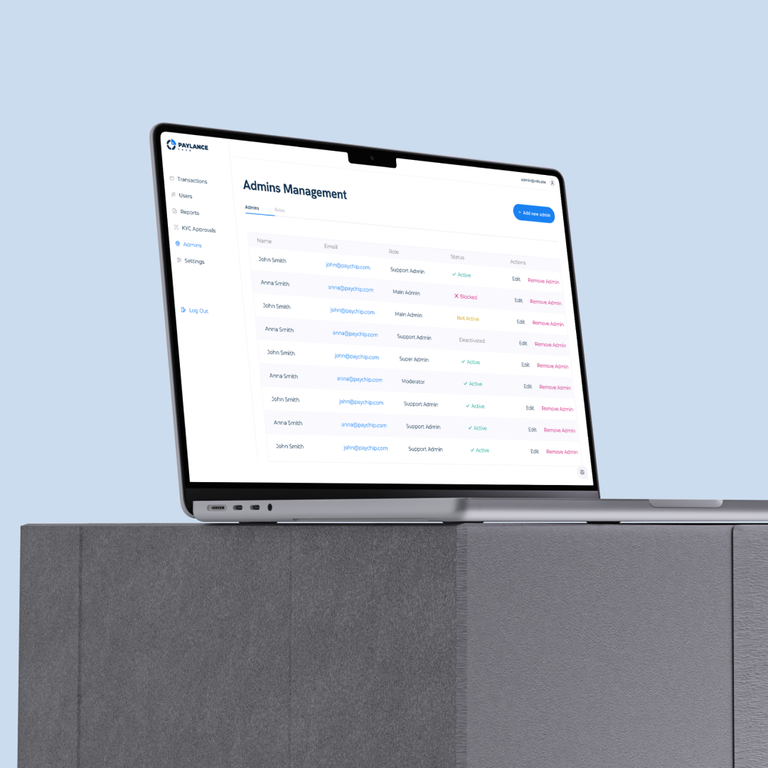
Design operator work alongside customer flows. Teams need queues, search, reason codes, notes, assignment, escalation, approval separation and repair tools with the same authorization and audit discipline as public APIs. Automate common, deterministic decisions while keeping a controlled human path for ambiguity and risk. Report cycle time, backlog age, exception rate and outcomes by tenant or plan where appropriate. The platform should improve the complete service, not simply transfer manual work from customers to support.
Subscription and entitlement logic deserves its own model. Store the internal plan, period, status, quantities, trial, cancellation, grace and entitlement history instead of reading a payment provider on every request. Treat checkout responses, webhooks, invoices, disputes and refunds as asynchronous evidence that can be delayed, duplicated, missing or out of order. Authenticate events, preserve provider identifiers and raw evidence safely, process idempotently, reconcile against an authoritative source, and give operators a repair path.
Integrations need explicit contracts for timeouts, retries, rate limits, circuit breaking, schema change, error classification and ownership. A timeout may occur after a provider accepted the command, so blind retry can create a duplicate payment or order. Use stable idempotency and correlation keys and separate internal state from provider state. Measure dependency latency and failure without exposing customer or tenant data in logs. The reliable boundary matters more than which Nest transport or client wrapper carries the call.
Most products should begin with a modular monolith: one deployable application with explicit domains, narrow module APIs, controlled transactions and one operating model. It is faster to test, release, trace and recover than an early network of services. Run HTTP traffic and background workers as separate processes when their resource and scaling profiles differ, while sharing the same domain contracts. Extract a service only when independent scaling, failure isolation, deployment cadence, security boundary, data ownership or a stable team boundary provides measurable value.
Design for growth through evidence: index and query behavior at expected data size, bounded pagination, cache ownership, connection budgets, queue depth and age, concurrency controls, bulk operations, archival and deletion, rate limits, backpressure, graceful degradation and capacity forecasting. Keep APIs and events versioned where consumers require it. A microservice boundary adds distributed consistency, network failure, observability, security and deployment obligations; it is a tradeoff, not an automatic maturity stage.
Build observability around product operations. Propagate a correlation ID and tenant-safe context through HTTP, messages, scheduled work and provider calls. Record request and job latency, errors, retries, queue wait and execution time, database and dependency behavior, event lag, subscription failures, entitlement denials and important business outcomes. Avoid raw tokens, secrets, payment data and unnecessary personal information. Dashboards and alerts should answer which tenant and journey are affected, what changed, where delay accumulated and whether recovery is progressing.
Define availability, latency, freshness and recovery objectives for critical workflows rather than one uptime number for the application. Load-test representative mixes and data sizes, verify generators and server telemetry, and observe the system after load stops. Exercise dependency failure, poison messages, worker restart, partial deployment, database restore and reconciliation. Performance and resilience evidence should guide extraction, scaling and caching decisions before complexity is added.
A strong SaaS architecture protects today’s tenant, workflow, and data invariants while keeping tomorrow’s change affordable to build, operate, and reverse.— GARNO.TECH Engineering Team
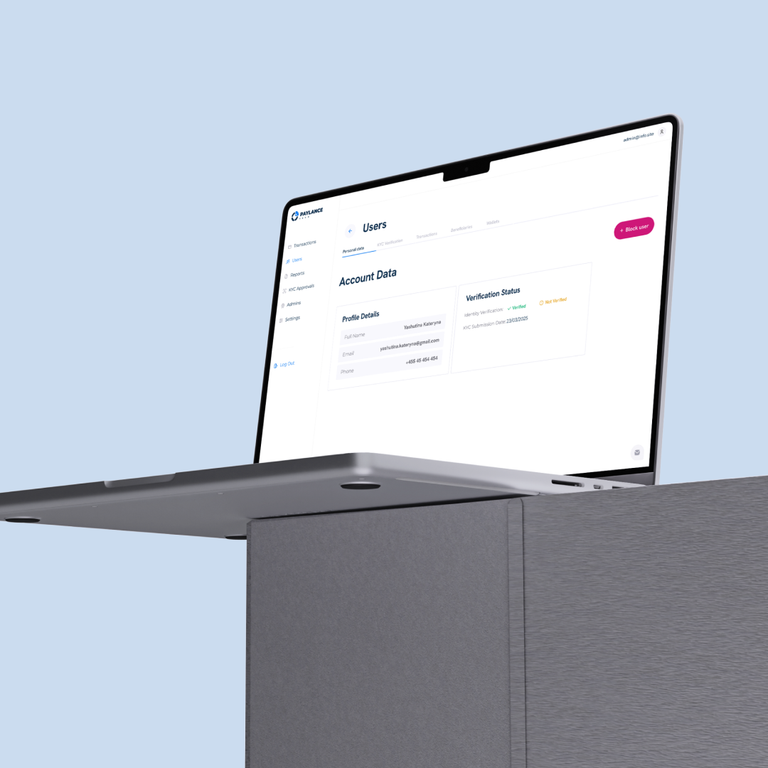
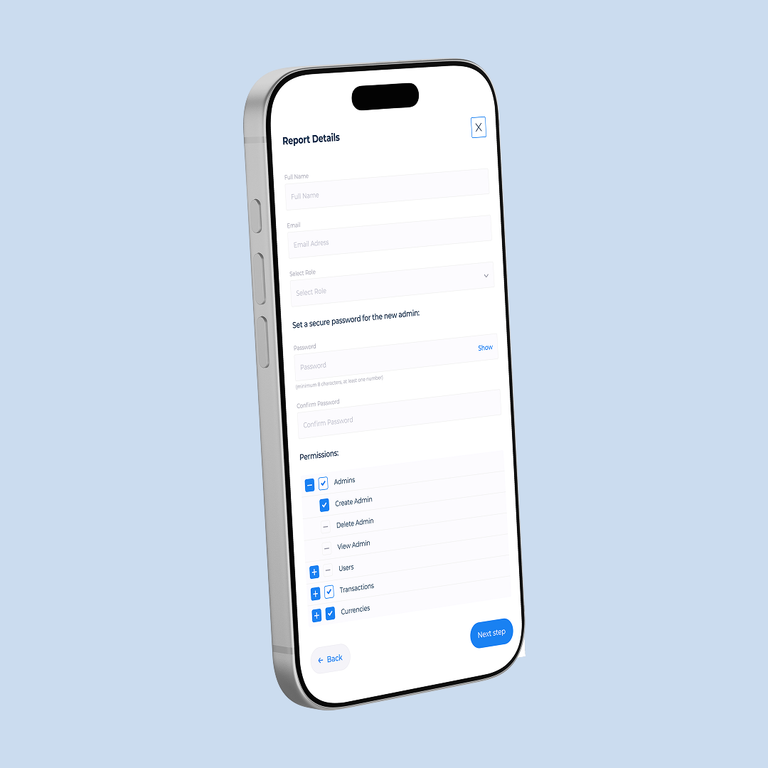
Resolve tenant identity from a trusted authentication and routing context, then carry it through the application operation and data access layer. Never accept an unverified tenant identifier from a request body as authority. Authorization must combine subject, tenant membership, role or permission, record relationship, action, state and sometimes plan entitlement. Guards are useful at transport boundaries, but services and policies must still protect operations invoked by jobs, messages or internal callers. Prefer deny-by-default behavior and test cross-tenant access systematically.
Choose data isolation from sensitivity, contractual and residency obligations, noisy-neighbour risk, backup and restore needs, customization, analytics, scale and operating capacity. Shared tables with a tenant key require mandatory filtering, uniqueness that includes the tenant and defenses against unsafe raw queries. Separate schemas or databases increase isolation and restore flexibility while multiplying provisioning, migrations, connections, monitoring and cost. Hybrid tiers may be appropriate, but every tenant must have a clear placement and migration path.
Protect the complete platform with input and output validation, secure session or token lifecycle, MFA for privileged roles, least-privilege service identities, secrets management, encryption, rate and abuse controls, dependency and container maintenance, audit trails, backups, restore exercises and an incident process. Separate customer roles from internal support and platform administration. Sensitive impersonation or break-glass access needs approval, visible indication, short duration, purpose, immutable audit and review.
Map data classes and lifecycle: collection, lawful purpose, access, export, retention, deletion, legal hold, backup and analytics. Threat-model invitation, account recovery, tenant switching, file handling, webhooks, GraphQL complexity, mass assignment, background jobs, support tooling and CI/CD. Compliance obligations vary by market and role, so translate applicable requirements into technical controls, owners and evidence with qualified specialists instead of relying on a framework checklist.
Discovery should define target tenants and users, the valuable workflow, alternatives, business model, subscription and entitlement rules, integrations, data ownership, security and regulatory assumptions, expected demand, service objectives, operator work and measurable product outcome. Map unknowns and test the riskiest one first. A prototype can test language and journey; a technical proof can test identity, provider or data behavior; a vertical slice should prove one outcome through deployment, telemetry, support and recovery.
Shape the first release as a coherent operating boundary, not a collection of screens. Include tenant provisioning, access administration, audit, support, billing or entitlement behavior, backups, observability and release evidence required to operate the chosen workflow. Defer breadth, not integrity. Set adoption, outcome, reliability and cost measures, then use real evidence to change priorities. An MVP that cannot diagnose or repair its core transaction only postpones essential work.
Build once and promote a versioned artifact through environments. Automate linting, type checks, unit and integration tests, contract checks, migrations, security checks and smoke journeys according to risk. Make database changes backward compatible across the rollout window; use feature flags and progressive traffic where uncertainty is high; define health, halt and rollback or forward-recovery criteria before release. Keep infrastructure and configuration reviewable and use workload identity instead of long-lived deployment secrets.
Operate with explicit product, domain, data, security and incident ownership. Maintain runbooks, service objectives, capacity forecasts, dependency inventory, architecture decisions, supported versions and a cadence for upgrades and recovery exercises. Measure lead time, change failure, recovery, escaped defects, tenant-impacting incidents and cost per useful operation. A stable platform is one the team can change and restore predictably, not one that merely survived its last release.
Looking for a NestJS engineering partner? Explore our NestJS Development Services. Bring the tenant and user model, critical workflows, permission rules, subscription behavior, integrations, data and residency constraints, expected demand, service objectives, current architecture and team. We can turn them into explicit domain and operating boundaries, a production-shaped vertical slice, staged delivery, measurable acceptance evidence and a platform your organization can continue to own.
Share the tenants, roles, workflows, subscription rules, integrations, data constraints and service objectives. We will shape a responsible architecture, production slice and delivery boundary.
Research and development of AI-powered solutions to optimize business workflows and enhance decision-making processes.
Analysis of machine learning models for predictive analytics in finance, e-commerce, and SaaS platforms.
Exploration of natural language processing and computer vision technologies to strengthen automation, personalization, and customer support.
Compare custom WordPress development and ready-made themes by workflow fit, editorial control, performance, accessibility, integrations, security, maintenance, cost, and migration risk.

8 min read
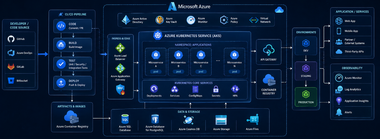
Connect Azure architecture with infrastructure as code, secure CI/CD, progressive delivery, workload identity, observability, incident response, scaling, and FinOps.
9 min read
Evaluate NestJS against product complexity, team skills, security, integrations, scale, delivery pace, and operating costs before choosing it for a business backend.

9 min read