
Selecting a FinTech Vendor: 12 Questions That Reveal Delivery Risk
- FinTech
- Vendor Selection
- Software Development
- Financial Technology
Selecting a FinTech Vendor: 12 Questions Every Business Should Ask
A FinTech vendor can influence money movement, customer identity, financial records, regulated processes, operational continuity, and the evidence a company must show to auditors or authorities. Selection is therefore a risk decision, not a portfolio contest. The buyer remains accountable for applicable obligations even when design, development, hosting, or operations are outsourced. Begin by classifying the service, data, critical functions, jurisdictions, dependencies, and failure consequences; then ask every candidate to answer the same questions with verifiable evidence.
Use the twelve questions below as a working due-diligence script. For each answer, record the claim, supporting artifact or demonstration, limits, owner, contract implication, and follow-up. Adjust legal and regulatory requirements with qualified counsel and compliance owners for the entity, product, market, and role. A certificate or familiar client logo can support a conclusion; it should never replace scope-specific analysis.
1. What Regulated FinTech Evidence Can You Show?
Ask for two or three engagements shaped like your problem: payments, wallets, lending, core or open-banking integration, trading, insurance, accounting, reconciliation, fraud, identity, reporting, or regulated workflow. Require the vendor to explain its precise role, jurisdiction, product stage, transaction and data characteristics, architecture, constraints, incidents, measured outcome, and what it would change. Separate company experience from the experience of the named people who will work with you.
Useful evidence includes a sanitized decision record, threat or data-flow model, delivery and incident metrics, test approach, operational runbook, migration or recovery plan, and a reference who can discuss difficult work. Reject vague claims of “bank-grade” engineering or compliance expertise without boundaries. Relevant experience should shorten discovery and reveal overlooked risk; it should not produce a copied architecture or an assumption that one regulator, payment provider, or market behaves like another.
2. How Will Security, Compliance, and Third-Party Risk Be Owned?
Ask the vendor to map assets, actors, data, money, trust boundaries, abuse cases, and obligations across your company, the vendor, cloud providers, processors, identity services, and subcontractors. The response should distinguish legal accountability, control operation, evidence production, incident cooperation, and residual risk. For payment-card scope, identify which PCI DSS requirements each party performs and how status is monitored. For an EU financial entity subject to DORA, critical or important ICT services may require pre-contract risk assessment, information registers, subcontracting visibility, audit and access rights, incident assistance, data return, and tested exit provisions.
Inspect secure development and operations: identity and least privilege, tenant and resource authorization, encryption and key ownership, secrets, logging, vulnerability and dependency management, artifact provenance, change controls, environments, data masking, retention and deletion, backup restoration, incident notification, security testing, and remediation targets. Ask for current scope and exceptions behind certifications or reports. The strongest answer acknowledges that controls vary by threat and responsibility and shows how evidence will remain available throughout the engagement.
3. How Will You Validate the Product and Its Obligations?
Ask how the vendor will turn a business idea into testable product, financial, operational, and compliance behavior. A credible discovery plan identifies users and prohibited users, money and data flows, ledger and reconciliation rules, authorization, limits, fees, reversals, disputes, statements, reporting, consent, fraud operations, support, audit evidence, and exceptional states—not only screens and happy-path stories.
Require assumptions, acceptance, and traceability. Representative prototypes or vertical slices should exercise the riskiest workflow with realistic providers, data shape, latency, failure, and manual operations. Decide who owns product choices, regulatory interpretation, sign-off, and changes. The vendor should challenge contradictions and expose unknowns rather than convert every request into backlog. Discovery is successful when it reduces decision risk and defines what will not be built.
4. Which Architecture Fits the Evidence, and Why?
The proposed architecture should follow transaction volume and shape, consistency and audit requirements, availability and recovery, data residency, integrations, team capability, release independence, security boundaries, reporting, and total operating cost. Ask candidates to compare at least one simpler alternative. A modular monolith may preserve transactions and change speed better than premature microservices; managed services may reduce operations but introduce limits, concentration, or exit cost.
Require failure and change design: idempotency, ordering, duplicate detection, time and currency semantics, immutable records, reconciliation, compatible schemas, timeouts and retries, provider degradation, queue recovery, observability, capacity, deployment, rollback or forward recovery, backup restore, and regional or provider failure. Ask what evidence would cause the architecture to evolve. A diagram full of fashionable components without ownership, limits, or recovery is sales material.
5. How Will You Control External Integrations and Money Movement?
Ask for the complete integration lifecycle: provider selection and due diligence, contracts and sandbox limitations, authentication and key rotation, network paths, data classification, rate and amount limits, idempotency, timeouts, retries and backoff, webhooks, ordering, duplicate events, versioning, outages, reconciliation, dispute evidence, monitoring, support escalation, and exit. Test signatures, replay protection, stale credentials, partial success, late events, provider inconsistency, and a response that is technically successful but financially wrong.
Clarify who owns each provider relationship and who can contact the provider during an incident. Keep adapters and stable internal contracts where practical so external quirks do not spread through the product. Do not accept “we have integrated it before” as proof: APIs, certification programs, commercial terms, regions, and provider behavior change. Require a production-shaped demonstration or explicit discovery task for every critical dependency.
- 6. Who will actually perform the work? Meet the product, architecture, engineering, quality, security, data, and delivery leads before signing. Verify allocation, location, employment or subcontracting, relevant experience, language and time overlap, replacement rules, background checks where justified, and who may access regulated systems or data.
- 7. How will delivery and change be governed? Ask for planning, evidence, demos, estimates, dependencies, risk and decision logs, release controls, status and forecast, escalation, scope change, and acceptance. Require bad news early. Progress should be visible through completed, operable outcomes—not story points, utilization, or confident percentages.
- 8. Which tests and controls are included? Map unit, component, contract, integration, end-to-end, authorization, security, migration, reconciliation, performance, resilience, accessibility, and recovery evidence to risks. Define environments, data, independent assessment, defect severity, remediation, false-positive ownership, release gates, and retained evidence.
- 9. Who owns and controls the product? Put source, designs, documentation, infrastructure code, artifacts, accounts, domains, certificates, data, telemetry, and decision records under explicit ownership. Define licences and prior IP, open-source obligations, access, export formats, assignment, portfolio use, retention, deletion, handover, and the right to engage another team.
10. What Is Included in the Price—and What Can Change It?
Ask every candidate to price the same scope and assumptions. The proposal should separate discovery, design, implementation, data migration, integrations, environments, cloud and licences, security and compliance work, independent testing, certification or provider onboarding, documentation, training, launch, hypercare, warranty, support, travel, taxes, and contingency. Identify client responsibilities and third-party costs. A low development figure is misleading if production readiness appears later as change requests.
Understand the commercial mechanism: fixed price, time and materials, capped capacity, milestone payment, retainer, or hybrid. Define acceptance, estimate confidence, billing unit, staffing changes, currency, payment dates, scope change, pause, cancellation, delay caused by missing access, and treatment of defects. Compare total cost through launch and an operating period, not the first milestone. Preserve the right to stop after a discovery or representative slice if evidence changes the case.
11. How Will the Product Be Operated and Supported?
Request an operating model before launch. It should define service objectives, monitoring and alert ownership, incident severity, acknowledgement and response, communication, on-call coverage, runbooks, problem review, security events, backups and timed restoration, dependency and platform updates, vulnerability remediation, capacity, cost review, access lifecycle, data requests, and regulatory or provider change. Distinguish warranty defects from support, maintenance, feature work, and emergency response.
Test continuity when the vendor is unavailable. The company should control source, artifacts, cloud and provider accounts, domains, certificates, keys or their governance, observability, documentation, data, and decision records. Define staff substitution, knowledge transfer, escrow only where it solves a real risk, notice, transition assistance, data return and deletion, and an executable exit plan. Long-term support is credible when another qualified team could operate the product from the retained evidence.
12. Can References Verify the Difficult Parts?
Ask references about the conditions that marketing avoids: an estimate that changed, a missed milestone, a production incident, a security finding, a difficult provider, team turnover, an unpopular trade-off, and handover. Confirm who actually performed the work and whether those people are proposed for your engagement. Ask whether the vendor surfaced bad news early, separated facts from confidence, documented decisions, controlled access, supported audits, and left the client able to operate.
Verify claims through more than one channel where consequence is high. Review public corporate records, named certifications and their scope, insurance evidence where relevant, security reports under controlled access, financial and staffing continuity, subcontractor use, sanctions or conflict checks, and direct references. Respect confidentiality: a responsible vendor will not expose another client’s source code, vulnerabilities, personal data, or regulated evidence to win a sale.
The right FinTech vendor does more than agree with requirements. It exposes assumptions, proves controls, explains trade-offs, and protects the client’s ability to operate, supervise, and exit.— GARNO.TECH Engineering Team
Choose the Evidence and Contract, Not the Pitch
Score vendors against the same weighted decision model: product and regulated fit, named team, evidence quality, architecture and integration judgment, security, delivery, operations, ownership and exit, commercial clarity, communication, and concentration risk. Mark mandatory conditions separately from preferences. Include internal effort and the risk of delay. Run a paid discovery or representative slice when documents cannot distinguish the strongest candidates.
Contract the answer, not the presentation. Convert material claims into scope, named roles, service levels, acceptance, audit and cooperation rights, subcontracting conditions, locations, security duties, incident assistance, ownership, data access and return, change control, termination, transition, and evidence. Keep an internal owner: outsourcing work never outsources accountability. The right vendor makes risk visible, offers proportionate controls, and leaves the product more operable than it found it.
A Four-Step FinTech Vendor Review
- /01Define the Regulated BoundaryMap the entity, markets, licences, critical functions, users, money and data flows, providers, obligations, impact, internal owners, mandatory controls, and conditions that disqualify a candidate.
- /02Review Named People and Engineering EvidenceGive candidates the same scenarios and request role-specific demonstrations, sanitized artifacts, architecture and integration reasoning, security scope, delivery evidence, assumptions, exclusions, and references.
- /03Exercise Failure and CooperationWalk through a provider outage, duplicate financial event, data corruption, critical vulnerability, key-person loss, audit request, and exit; record decisions, response, evidence, communication, recovery, and commercial treatment.
- /04Contract Ownership, Evidence, and ExitTranslate accepted claims into named roles, service levels, security and incident duties, audit access, subcontracting, ownership, data return, change control, acceptance, termination, transition, and ongoing review.
What evidence should drive a FinTech vendor decision?
What evidence should drive a FinTech vendor decision?
Vendor selection should fit the product leadership model. Continue with external CTO leadership for FinTech, use the technical due-diligence checklist, and review our fractional technology leadership approach. Use qualified legal, compliance, privacy, and security specialists for obligations that depend on the entity, jurisdiction, licence, data, and service.
Turn Vendor Selection into a Defensible Decision
Share the product, entity and markets, critical journeys, data and money flows, providers, current architecture, obligations, deadline, candidate proposals, and internal ownership. GARNO.TECH can define a proportionate evidence request, technical and operating scenarios, scorecard, risk register, representative assessment, acceptance and exit criteria, and the technology clauses that legal and compliance owners should evaluate.
Publications
Our research
Research and development of AI-powered solutions to optimize business workflows and enhance decision-making processes.
Analysis of machine learning models for predictive analytics in finance, e-commerce, and SaaS platforms.
Exploration of natural language processing and computer vision technologies to strengthen automation, personalization, and customer support.
Network Load Testing: How to Prove a System Can Scale
Design reproducible load tests around user outcomes, realistic traffic, percentiles, full-path telemetry, autoscaling, saturation, failure, recovery, data integrity, and a safe operating envelope.

10 min read
01 Aug 2026
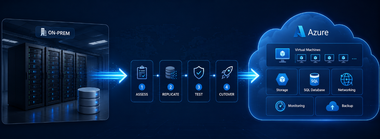
Azure Cloud Implementation: Migration Checklist and Mistakes
A practical Azure migration checklist for workload discovery, landing zones, strategy, identity, data, migration waves, recovery, performance, cost and operating ownership.
8 min read
04 Aug 2026
CTO Responsibilities for Security and Cloud Infrastructure: An Accountable Operating Model
Define the CTO mandate for cyber and cloud risk across risk appetite, evidence, control ownership, shared responsibility, incident authority, cost, review, and escalation.

9 min read
08 Sep 2026