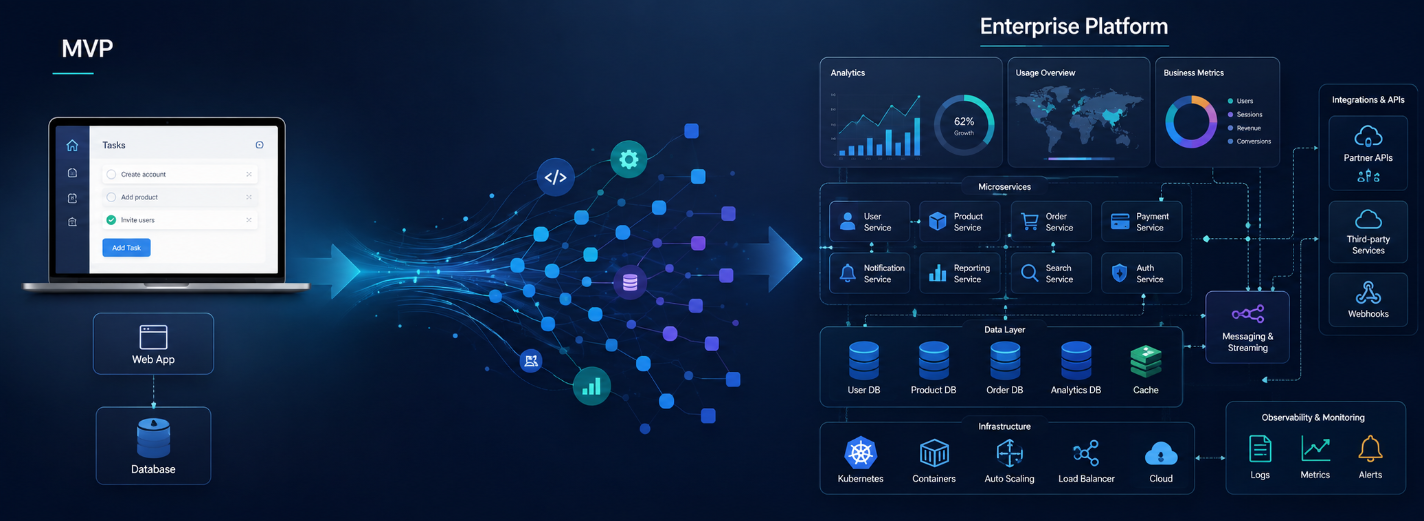
Scaling a NestJS Application from MVP to Enterprise
- NestJS
- Node.js
- application development
- backend development
- MVP
- enterprise software
Scaling a NestJS Application from MVP to Enterprise
An MVP becomes an enterprise platform through a sequence of evidence-backed changes, not one architectural rewrite. The useful question is never “Is NestJS enterprise-ready?” in isolation. It is whether the product’s modules, data, contracts, delivery system, security controls, infrastructure, and ownership can absorb the next credible increase in customers, transactions, integrations, teams, obligations, and failure cost.
Start with critical journeys and a baseline: users and tenants, request and job rates, latency, errors, saturation, database behavior, deployment frequency, change failure, recovery time, incidents, support load, cloud cost, and cross-team waits. Map systems of record, domain ownership, trust boundaries, dependencies, and manual operations. This distinguishes a code problem from a data, platform, process, or organization problem.
Preserve options by strengthening boundaries before distribution. A modular NestJS application can evolve its modules, storage, queues, caches, replicas, and infrastructure without immediately becoming microservices. Add complexity only when an observed constraint has an owner, measurable outcome, acceptance threshold, and operational budget. Enterprise maturity means repeatable decisions and recoverable change, not the number of services or decorators.
Why NestJS Fits a Production-Shaped MVP
NestJS gives an early product useful structure without requiring a large platform. Modules, providers, dependency injection, guards, interceptors, pipes, exception filters, and adapters can separate application policy from transport and infrastructure. TypeScript supports shared language and tooling across frontend and backend teams. REST, GraphQL, WebSockets, queues, and scheduled work can use the same domain capabilities when boundaries are explicit.
Use that structure selectively. Organize modules around business capabilities and lifecycle, not technical folders alone. Keep controllers thin, validate inputs at the edge, place orchestration in application services, keep domain rules testable, and hide databases and external providers behind owned interfaces. Avoid global modules, circular imports, ambient request state, and “shared” packages that let every area depend on every other one.
A production-shaped MVP still needs access control, data ownership, migrations, safe configuration and secrets, traceable errors, basic service telemetry, automated deployment, backup where data matters, and a recovery path. These are not premature enterprise features; they make the experiment trustworthy. Defer hypothetical multi-region, service meshes, generalized frameworks, and independent services until evidence makes their ongoing ownership worthwhile.
- One complete value journey: a precise user can reach a meaningful outcome through real access, data, integrations, failure handling, support, and measurement.
- Explicit product boundaries: cohesive modules own rules and data, expose narrow contracts, isolate provider details, and avoid global state, circular imports, and uncontrolled shared code.
- Trustworthy change: risk-based tests, compatible migrations and contracts, one traceable artifact, protected configuration, observable release, and tested rollback or roll-forward.
- Operable learning: service telemetry, owned alerts, backup and recovery, incident response, cost visibility, and product evidence support the next decision without hypothetical platform complexity.
Model the Product Before Generalizing the Platform
Custom development earns its cost when it expresses a product-specific rule, workflow, integration, control, or operational advantage. Model the real language of customers and operators: states, invariants, permissions, monetary and time semantics, exceptions, reconciliation, and audit history. Do not turn an uncertain product into a generic framework before several real use cases prove the abstraction.
Choose maintained components for commodity concerns when their contracts fit: identity provider, payment gateway, object storage, messaging, email, search, or observability. Wrap critical external behavior behind an interface owned by the product, but avoid ceremonial layers that merely rename an SDK. Record provider limits, retries, idempotency, webhook verification, degraded modes, data ownership, cost, and exit.
Make change safe before making the system broad. Use database migrations compatible with the running application, version public contracts, and separate deployment from feature exposure when helpful. Automated tests follow risk: domain invariants, authorization, repository behavior, provider contracts, concurrency, duplicate messages, migrations, and critical journeys. A test count without meaningful assertions or release ownership gives false confidence.
Build one traceable artifact from reviewed source and promote it through representative environments. Configuration and infrastructure changes belong to the same change story. Define normal, emergency, rollback, roll-forward, and decommission paths; protect production approvals and credentials; observe releases by version; and stop exposure on agreed health thresholds. This delivery foundation scales further than an early split into services.
Scale the Constraint Revealed by Real Usage
Scale from observed bottlenecks. Trace critical journeys and measure endpoint and job latency, throughput, saturation, query plans, connection pools, lock contention, queue age, cache behavior, provider quotas, memory, CPU, event-loop delay, error rates, and cost per useful outcome. Load tests need representative data and distributions; averages can hide one large tenant, slow query, or burst that controls production.
Common improvements are simpler than a rewrite: correct indexes and queries, bounded pagination, reduced round trips, batched work, explicit timeouts, caching with ownership and invalidation, asynchronous processing, idempotent consumers, concurrency limits, backpressure, horizontal application replicas, and workload isolation. Size pools and queues together so moving contention does not masquerade as solving it.
Define service objectives from user and business impact. Correlate requests, jobs, deployments, and dependencies; alert on actionable symptoms; maintain runbooks and named responders; test backup restore and failure modes. Capacity plans include headroom and provider limits. A system is scalable when increased demand remains observable, bounded, recoverable, and economically explainable.
A scalable NestJS platform is not the one prepared for every imagined future. It is the one whose boundaries, evidence, and operating controls let the team make the next necessary change safely.— GARNO.TECH Engineering Team
Build Enterprise Capability Incrementally
Enterprise capability means predictable control under greater consequence. Strengthen identity lifecycle, least privilege, separation of duties, secrets and key management, audit evidence, vulnerability and dependency response, privacy and retention, incident communication, business continuity, and vendor ownership according to the product’s obligations. Security belongs in design, delivery, operations, and support rather than a release gate at the end.
Data evolution needs explicit systems of record, quality rules, lineage, retention, archival, correction, reconciliation, backup, restore, and migration. Reporting and analytics should not overload transactional paths or create uncontrolled copies. Schema changes use expand-migrate-contract and verifiable backfills. Access to production data is purpose-limited, audited, and designed for support without normalizing broad privilege.
Organizational scale needs interfaces as deliberate as software interfaces. Define product and technical decision rights, module and service owners, on-call and support boundaries, architecture review triggers, exception expiry, vendor responsibilities, and escalation. Publish supported patterns and paved paths instead of central approval for routine work. Teams need the telemetry, access, budget feedback, and authority to operate what they build.
Governance should shorten responsible decisions. A change record needs context, consequence, options, chosen trade-off, owner, evidence, and review trigger; it does not need a committee for every implementation detail. Track lead time, change failure, recovery, reliability, toil, security response, unit cost, and blocked work. Remove controls that create no useful decision, and strengthen those whose absence repeatedly produces risk.
Treat modernization as a managed portfolio rather than an endless platform program. Keep a visible register of constraints, consequences, evidence, owners, dependencies, target measures, and review dates. Sequence work so that one change creates the information or safety needed for the next: observability before tuning, ownership before extraction, restore tests before migration, and contract protection before independent release. Limit concurrent initiatives, reserve capacity for operational debt, and define what will be retired when a replacement succeeds. Every platform investment needs a consumer, an adoption path, support responsibility, and an exit condition. Review the portfolio with product, engineering, security, operations, and finance together, because a locally elegant improvement can still increase customer risk, delivery delay, or unit cost elsewhere. Close initiatives when the measured constraint disappears; do not let temporary migration machinery become a permanent second system.
A modular monolith can remain an enterprise architecture. Extract a service only when a cohesive boundary needs independent deployment, scaling, isolation, recovery, technology, or team ownership often enough to pay for networks, partial failure, contracts, eventual consistency, observability, security, pipelines, and on-call. Team count and release contention may justify distribution before traffic; fashionable architecture does not.
Before extraction, assign module and data ownership, narrow interfaces, remove circular dependencies, and measure the constraint. Choose a bounded candidate and define success. During coexistence, publish compatible APIs or events, establish exclusive data ownership, handle retries and duplicates, correlate operations, reconcile state, canary traffic, and retain a tested fallback. Stop extracting when the next boundary does not earn its cost.
Choose a Team That Can Own the Operating Model
A capable NestJS team understands product decisions, domain modelling, databases, distributed failure, cloud and delivery, security, testing, observability, incidents, cost, and organizational ownership—not only framework APIs. Ask candidates to diagnose a real constraint and compare options. Strong answers state assumptions, rejected alternatives, failure modes, acceptance evidence, operational work, and the smallest responsible change.
Review production-shaped evidence: architecture decisions, module and data maps, migrations, contract and authorization tests, pipeline and release controls, traces and dashboards, incident reviews, restore exercises, and handover material. Verify that proposed senior engineers did the cited work and will join the engagement. Framework certifications or a long technology list cannot substitute for operational judgment.
Define the engagement around an outcome. Clarify decision rights, product and technical owners, repositories and cloud access, architecture and quality expectations, service responsibility, communication, budget assumptions, subcontractors, intellectual property, documentation, support, and exit. Demonstrate complete vertical slices, maintain a decision and risk log, expose bad news early, and connect spend to accepted behavior and reduced risk.
Plan capability transfer from the start. Internal engineers should participate in decisions, releases, incidents, and operational reviews; source, infrastructure, dashboards, runbooks, provider contacts, and current records stay accessible. A partner succeeds when the client can understand, operate, recover, and evolve the platform without permanent dependence.
GARNO.TECH helps teams build new NestJS products, strengthen modular boundaries, modernize data and delivery, resolve performance and reliability constraints, and extract services when the evidence supports them. Explore our NestJS development services or begin with a focused assessment of the current limiting constraint, baseline, target outcome, risks, and ownership.
Four Evidence-Gated Stages from NestJS MVP to Platform
- /01Deliver One Production-Shaped JourneyTest the leading product assumption end to end with explicit access, data ownership, provider contracts, measurement, support, observability, deployment, and recovery.
- /02Establish Modular and Data BoundariesSeparate cohesive business capabilities, invariants, transactions, owned interfaces, and systems of record inside a modular application before considering distributed deployment.
- /03Strengthen Delivery and Operations from RiskAdd compatible migrations, contracts, security controls, tests, progressive release, telemetry, service objectives, incident response, capacity, backup, restore, and cost ownership where evidence shows consequence.
- /04Distribute Only a Boundary That Earns ItExtract a service for demonstrated deployment, scaling, isolation, recovery, technology, or team ownership needs; measure the benefit and stop when the next boundary does not repay its operating cost.
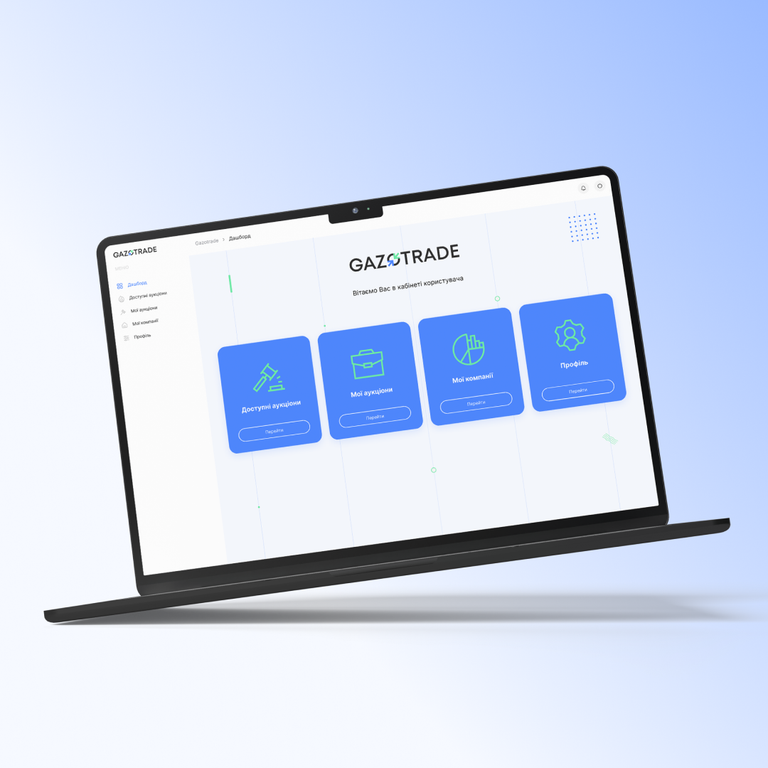
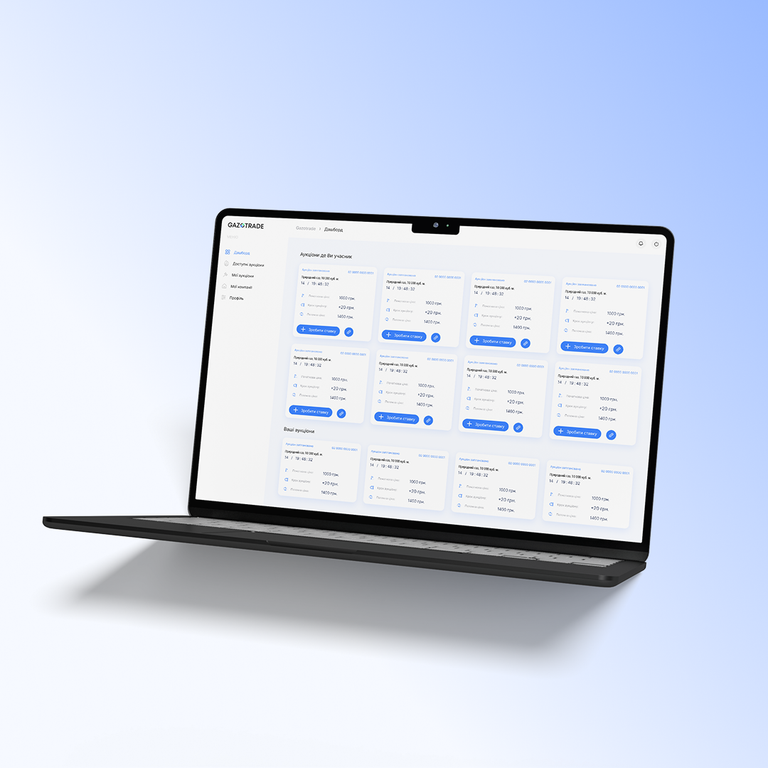

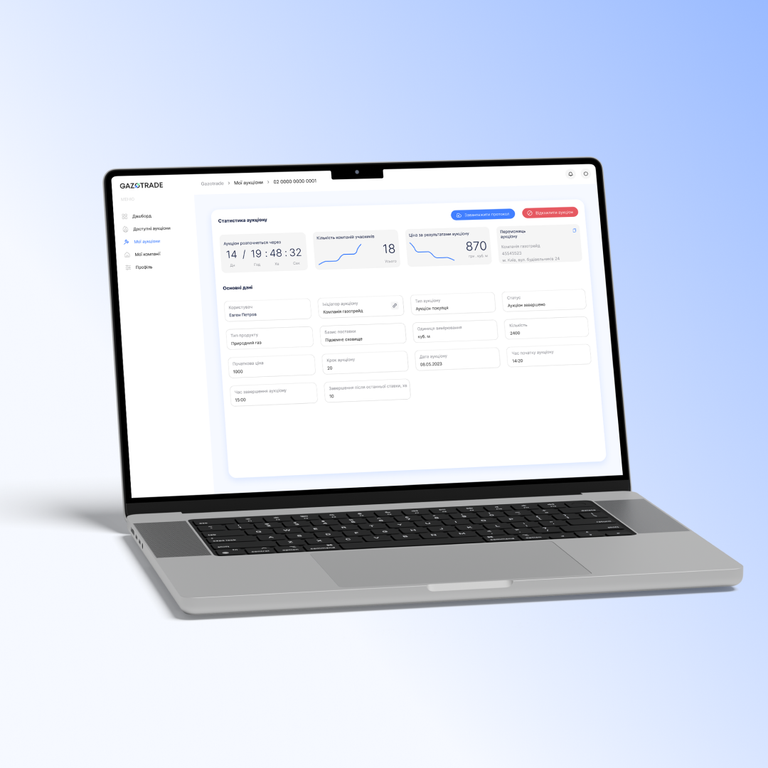
Should a NestJS MVP start with microservices and enterprise infrastructure?
Should a NestJS MVP start with microservices and enterprise infrastructure?
Scale the Next NestJS Constraint from Evidence
Share the critical journeys, architecture and data boundaries, repositories, delivery flow, service targets, incidents, telemetry, team ownership, expected growth, and current constraint. We will define the smallest responsible modernization or scaling step with acceptance, migration, recovery, and ownership.
Publications
Our research
Research and development of AI-powered solutions to optimize business workflows and enhance decision-making processes.
Analysis of machine learning models for predictive analytics in finance, e-commerce, and SaaS platforms.
Exploration of natural language processing and computer vision technologies to strengthen automation, personalization, and customer support.
Angular Micro Frontends: A Production Decision Guide
Decide whether Angular micro frontends improve enterprise delivery through domain ownership, independent releases, runtime contracts, dependency policy, routing, state, design governance, and measurable evidence.

10 min read
31 Aug 2026
Designing REST, GraphQL and Distributed APIs with NestJS
Design NestJS APIs around business boundaries, authoritative contracts, REST and GraphQL trade-offs, asynchronous communication, security, reliability and operating ownership.
9 min read
05 Aug 2026
How to Upgrade Angular Without Stopping Product Development
A practical version-by-version Angular migration plan using dependency evidence, parallel delivery rules, focused compatibility work, regression gates, staged releases, rollback, and debt closure.
10 min read
08 Sep 2026