
/ 01
Complete Transaction Lifecycle
Fund pending, failed, expired, reversed, disputed, and reconciled states with idempotency, evidence, communication, and operator repair—not only initiation and success.
There is no reliable universal price for a FinTech app in 2026. A budget becomes credible only when it describes a specific financial product, legal and operating boundary, release outcome, transaction lifecycle, provider chain, assurance obligation, team, and period of ownership. Two interfaces with similar screen counts may differ radically because one displays information while the other moves money, makes eligibility decisions, stores regulated data, or must prove every operator action.
Treat the estimate as a financial model rather than a vendor quotation. Separate discovery, build, external services, launch, contingency, and recurring operation. Show low, expected, and high scenarios with assumptions, exclusions, confidence, and the evidence that could change them. Include client-side work such as legal interpretation, policy, contracts, subject-matter decisions, data preparation, acceptance, and operational staffing. Work outside the supplier invoice still consumes time and cash.
The strongest budget answers four questions: what coherent outcome will be operable at each funding gate; which risks and dependencies control the range; what evidence releases the next tranche; and what the product costs per customer, transaction, verification, dispute, or report after launch. That structure lets leadership compare options, detect variance early, and stop or reshape a weak investment without pretending uncertainty has disappeared.
Start with the customer and financial outcome, not a feature inventory. Define entities, markets, user and operator roles, channels, currencies, products, volume assumptions, authoritative records, revenue model, target date, availability, recovery, and support hours. Then map each critical journey from intent through completion and repair. “Payments” may include eligibility, authorization, strong authentication, pending state, rejection, duplicate suppression, reversal, refund, dispute, reconciliation, statement, notification, and manual correction.
Estimate states and exceptions because they drive data, interfaces, permissions, audit evidence, monitoring, support tools, and tests. Define amount and rounding rules, time and currency semantics, limits, idempotency, ordering, late or contradictory provider events, unknown outcomes, and who may correct what. A thin happy path is cheaper to demonstrate but expensive to operate when real money becomes stuck between the product and a provider.
Build a coherent first release. Remove a market, product, role, provider, or optional workflow entirely instead of leaving its financial edges vague. A basic release might provide accounts, one governed transaction journey, status, notifications, and operator repair. A broader product may add verification, payments, reporting, administration, multiple roles, or several providers. Complexity rises nonlinearly when markets, currencies, products, organizations, permissions, and automated financial workflows interact.
Security cost comes from understanding threats, implementing controls, producing evidence, responding to findings, and operating the controls. Budget identity and authorization, privileged access, transaction controls, encryption and key ownership, secrets, secure delivery, dependency management, data protection, immutable audit records, monitoring, vulnerability assessment, incident response, backup restoration, resilience exercises, remediation, documentation, and training. A checklist without ownership and verification is not an assurance plan.
Determine obligations from the legal entity, activity, role in the value chain, markets, customers, data, payment flow, outsourcing, and provider contracts. KYC or KYB, sanctions screening, AML controls, privacy, payment security, consumer protection, records, reporting, accessibility, and operational resilience may apply differently. A regulated vendor can provide a capability without transferring all accountability. Record who interprets, decides, implements, supplies evidence, monitors, and responds.
Keep external legal advice, licences, registrations, audits, certification, penetration tests, insurance, and scheme fees visible beside software delivery. Price the evidence expected at launch: policies, data-flow and architecture records, threat models, access reviews, supplier due diligence, test results, approvals, retention, recovery proof, incident procedures, and staff training. Discovering these needs after implementation turns assurance into redesign and converts a product deadline into a regulatory dependency.
Banking, payment, card, identity, fraud, credit, market-data, accounting, CRM, messaging, and analytics providers create more than an API task. Budget commercial review, onboarding, credentials, sandbox limitations, certification, data mapping, consent, callback verification, idempotency, rate limits, timeouts, retries, asynchronous status, duplicate messages, reconciliation, observability, support tools, provider incidents, version changes, and replacement.
Separate engineering effort from pass-through charges. Vendors may price setup, environments, seats, checks, active users, transactions, volume tiers, disputes, messages, storage, support, minimum commitments, or currency conversion. Model expected and stress volumes and show when a tier or minimum changes unit economics. Include the company time required for procurement, risk review, contracting, support escalation, invoice verification, and vendor oversight.
Put every external dependency on the schedule with an owner, requested date, latest safe date, fallback, and escalation. A five-day integration can wait eight weeks for a contract or production credentials. Prove the riskiest provider path early with representative data and failure handling. A mock that always responds immediately cannot validate launch cost, schedule, reconciliation, customer state, or operational load.
Choose channels from customer behavior and product constraints. Responsive web, native mobile, cross-platform mobile, internal operations, and partner APIs each add design, testing, release, security, and support responsibilities. Do not multiply one screen estimate by the number of clients: shared domain behavior can reduce duplication, while platform permissions, app-store delivery, offline behavior, device security, deep links, accessibility, and release compatibility add distinct work.
Select architecture for transaction integrity, scale, recovery, change boundaries, and team capability. A modular monolith is often economical for an early product because it preserves local transactions and limits operational surface. Services can be justified by independent ownership, isolation, scaling, or release needs, but they introduce network failure, contract evolution, distributed observability, data consistency, deployment, and on-call cost. Pay for that complexity only when the requirement exists.
Include environments, infrastructure as code, databases, queues, object storage, caches, networks, identity, secrets, build systems, deployment, observability, backups, restoration, disaster recovery, capacity tests, data migration, and supplier exit. Forecast baseline and peak demand, retention, logs, transfer, replicas, nonproduction, and recovery capacity. Architecture is affordable when the owning team can deploy, diagnose, secure, recover, and change it—not when its diagram looks sophisticated.
Financial experience design must make amounts, fees, exchange rates, status, timing, authorization, reversibility, risk, and errors comprehensible. Fund research with customers and operators, journey mapping, content design, prototypes, a design system, accessibility, and usability testing for ordinary and exceptional states. Ambiguous “success,” hidden fees, stale balances, or an unexplained pending transaction creates support cost and can become a trust or compliance failure.
Build the team from capabilities: product and financial-domain leadership, analysis, design and content, application and data engineering, provider integration, quality engineering, security, platform delivery, operations, compliance, legal input, and support. Show allocation and availability by phase. A specialist who joins for one day a week can become the critical path if all decisions wait for that day. Include onboarding, review, coordination, leave, time-zone overlap, and client decision latency.
Quality work should cover business rules, state transitions, permissions, API contracts, provider failures, reconciliation, browsers and devices, performance, security, accessibility, deployment, recovery, and migration. Automation reduces repeated verification; it does not eliminate exploratory, domain, or operational testing. Budget production readiness and launch support as deliverables with acceptance evidence rather than hoping that feature completion implies an operable service.
Model total ownership before approving construction. Recurring cost may include cloud environments, data and transfer, logs and retention, identity and sanctions checks, payment and banking fees, fraud tools, messages, licences, certificates, app stores, monitoring, support systems, audits, insurance, and professional advice. Express variable cost per meaningful unit under expected, peak, and adverse scenarios.
Fund the operating capability: customer support, reconciliation, financial operations, incident response, on-call coverage, access review, vulnerability remediation, dependency upgrades, provider changes, backup and recovery tests, cost management, regulatory updates, data requests, reporting, and product improvement. Name service hours and escalation expectations. A round-the-clock promise requires people and suppliers capable of fulfilling it, not only redundant infrastructure.
Reserve for change without turning contingency into an invisible feature fund. Keep product scope, management reserve, and known pass-through charges separate. Forecast lifecycle events such as volume growth, a new market, provider replacement, pricing changes, major incidents, migration, acquisition due diligence, and orderly shutdown. A product can fit the development budget yet fail because its unit economics, support load, or assurance burden was never modeled.
A credible FinTech budget connects every major amount to a product outcome, a risk, an owner, and the evidence that will release or reshape the next investment.— GARNO.TECH
Approve FinTech investment in gates. Discovery should resolve the business, transaction, provider, regulatory, architecture, and operating boundary. A representative production-shaped slice should prove the riskiest end-to-end journey. First-release funding should include launch evidence and operational readiness. Scale funding should follow measured demand, provider behavior, control performance, team throughput, incidents, and unit cost.
Give every gate a spending limit, decision date, acceptance evidence, and explicit continue, reshape, defer, or stop option. Maintain an assumptions and decisions ledger. Compare actual spend with completed outcomes and remaining risk; explain variance by scope, rate, productivity, rework, external delay, fee, or realized uncertainty. Reforecast when evidence changes instead of protecting an obsolete baseline.
Experienced FinTech development services should provide more than a single price. They should expose the transaction model, assurance boundary, dependency network, team capacity, external costs, production responsibilities, confidence range, and facts that move the forecast. The defensible 2026 budget is the one leadership can challenge, govern, and revise while there is still time to protect cash and trust.
Share the entities, markets, transaction journey, providers, obligations, launch target, current team, operating model, available evidence, and unresolved decisions. GARNO.TECH can define the release boundary, confidence range, dependency plan, acceptance gates, ownership model, reserve, and total-cost forecast.
Research and development of AI-powered solutions to optimize business workflows and enhance decision-making processes.
Analysis of machine learning models for predictive analytics in finance, e-commerce, and SaaS platforms.
Exploration of natural language processing and computer vision technologies to strengthen automation, personalization, and customer support.
Estimate Azure workloads across product engineering, platform work, compute, data, networking, security, environments, operations, support, commitments, and change.

10 min read
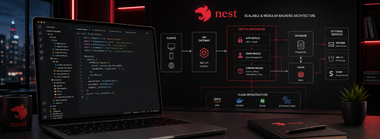
A practical guide to planning a NestJS backend around business capabilities, API contracts, data ownership, security, integrations, background work, operations, and measurable delivery stages.
8 min read
Optimize data-heavy Angular applications through representative profiling, bounded DOM and computation, deliberate state updates, virtualization, chart control, route budgets, leak prevention, and field evidence.

9 min read