
/ 01
Aggregate-shaped access
MongoDB fits when data used together can live in bounded documents and most reads do not require broad relational joins. Model access patterns first.
MongoDB is a document database that stores records in BSON documents and makes a document the natural unit of retrieval, update, and atomicity. It is a strong choice when the product works with self-contained aggregates whose nested structure is read and changed together: a catalog item with category-specific attributes, a published content object, a configuration snapshot, a customer profile, or a device state. The architectural advantage comes from aligning storage with application behavior, not from avoiding design.
Begin with evidence. Map the product’s entities, ownership, invariants, access paths, update frequency, document growth, retention, consistency needs, query selectivity, analytical demands, traffic distribution, availability and recovery objectives, regions, security obligations, and operating team. Then compare MongoDB with a relational database and any specialized store against the same scenarios. Technology familiarity and early development speed matter, but so do the cost of an incorrect record, a cross-entity change, a restore, a shard-key mistake, and five years of schema evolution.
MongoDB can support transactions, joins through aggregation, validation, search integrations, replication, and horizontal partitioning. Those capabilities do not erase tradeoffs. Cross-document work is more expensive than a well-shaped single-document operation; distributed transactions add coordination; aggregation cannot repair unclear ownership; replicas do not replace backups; sharding does not make every query scalable. A sound decision states which benefits the workload will actually use and which complexity the team accepts in return.
Flexible schema means documents in a collection can differ; it does not mean their shape should be accidental. Define required fields, types, ranges, enumerations, ownership, lifecycle, and compatibility rules with collection validation and application contracts. Version important shapes when consumers overlap. Observe rejected writes and old variants. Without governance, optional fields acquire conflicting meanings, monetary values change types, identifiers lose consistency, and every query becomes defensive archaeology.
Embed data when it belongs to one aggregate, is normally read together, changes under the same rules, and has bounded cardinality and size. Refer to another document when it has an independent lifecycle, is shared widely, grows without a reliable bound, changes at a different rate, or would be duplicated with costly consistency requirements. Duplication can be a deliberate read optimization, but it needs a source of truth, propagation mechanism, acceptable staleness, repair procedure, and metric.
The document-size limit is only the outer boundary. Operational trouble begins earlier when a growing array turns one record into a hot write target, increases network and memory cost, expands indexes, causes frequent document movement, or makes every small update carry a large aggregate. Model histories, comments, events, measurements, memberships, and other unbounded collections as separate records with queryable ownership keys. Measure the 50th, 95th, and worst-case document, fan-out, and update contention using representative data.
Performance starts with specific operations. For each critical read and write, record the filter, sort, projection, update shape, expected result count, latency objective, frequency, consistency level, and growth curve. Build compound indexes around those patterns, paying attention to equality, sort, range, selectivity, multikey behavior, collation, and covered fields. Inspect execution plans and keys and documents examined on production-shaped distributions. An index that makes one query fast also consumes memory and disk, slows writes, lengthens builds, and adds replication work.
Replica sets provide redundancy and automatic election, but application behavior depends on write concern, read concern, read preference, retry semantics, driver timeouts, and topology changes. Acknowledgment from one node and majority durability represent different risk. Reading from a secondary can reduce pressure or latency but can expose stale state. Retried operations need idempotency when external effects are involved. Test primary loss, step-down, network delay, recovery, and client reconnection rather than assuming the driver makes failure invisible.
Sharding distributes collections across shards by a chosen key. A useful shard key supports common routing, offers enough cardinality, avoids concentrated sequential writes, and produces a distribution the team can operate as data and traffic change. Queries without the shard key may scatter across the cluster. Poor keys create hotspots, uneven chunks, difficult resharding, or cross-shard work. Before sharding, remove inefficient queries, control document and index growth, scale the replica set appropriately, and prove that a single shard is the actual constraint.
Protect the database with bounded connection pools, admission control, timeouts, rate and concurrency limits, controlled batch sizes, and separation of interactive traffic from exports, backfills, and analytics. Track latency by operation, error classes, connection and queue pressure, cache and disk behavior, replication lag, oplog window, elections, document and index growth, slow queries, shard distribution, backup freshness, and restore results. Global averages can hide one tenant, shard, region, or document shape that is already failing.
Availability is incomplete without recoverability. Keep encrypted backups with retention aligned to business and regulatory needs, protect them from the same credentials and failures as production, and perform timed restores into a clean environment. Verify data and critical journeys, not merely process exit codes. Define recovery point and recovery time objectives, owners, communication, and the decision path for accidental deletion, corruption, compromised credentials, regional loss, and an unsuccessful release.
A relational database is usually the clearer foundation when the domain is defined by many independent entities and relationships, integrity spans those entities, ad hoc joins and reporting are central, and the team benefits from normalized facts with declarative foreign keys and constraints. Accounting, ledgers, inventory allocation, order and payment state, workforce records, entitlements, and regulated reporting often reward relational semantics. PostgreSQL can also hold JSON alongside typed relational columns, so evolving attributes alone do not require a document database.
MongoDB supports multi-document transactions, but frequent reliance on them may reveal that the aggregate boundaries and storage model are fighting the workload. If most requests join several collections, every write synchronizes duplicated facts, reporting repeatedly reconstructs relationships, and integrity depends on application code in many services, compare the resulting complexity with a relational design. Conversely, forcing naturally nested, independently retrieved aggregates into many tables can create needless joins and impedance. The right comparison uses real operations, not category slogans.
A product may use both systems, but each additional system needs a purpose, owner, contract, security model, pipeline, monitoring, backup, recovery exercise, upgrade path, and incident competence. Define the source of truth and consistency mechanism before copying data. Use change streams, events, or scheduled reconciliation with idempotency, ordering, replay, lag visibility, and repair. Do not add MongoDB merely as a flexible shadow of relational data; that creates two places to be wrong without creating a new capability.
Start with a small set of consequential commands and queries. For each, write the business invariant, fields read, fields changed, atomicity boundary, concurrency behavior, sort and pagination, expected cardinality, response objective, and failure result. Group information that belongs and changes together. Split information that grows independently or has a separate owner. Use stable identifiers and explicit status transitions; store money, dates, units, and external references in consistent representations.
Design for change across deployed versions. Add fields with safe defaults or tolerant readers, deploy readers before writers when changing shape, backfill in bounded resumable batches, verify counts and meaning, and remove old fields only after all consumers and rollback windows have passed. Database validation should reject dangerous state while allowing the planned compatibility interval. Migration code needs version control, review, observability, idempotency, and a recovery decision just like application code.
Secure the whole access path. Give applications distinct identities and only the database actions they require; separate ownership, migration, support, analytics, and runtime privileges. Restrict network paths, encrypt transport and stored data appropriately, rotate secrets, audit consequential access, control exports, and avoid sensitive values in logs. Tenant isolation must propagate through filters, compound indexes, updates, aggregation pipelines, background jobs, caches, files, and administrative tools. A missing tenant predicate is a security defect, not a query bug.
Validate the design with representative documents, skew, indexes, concurrent reads and writes, updates to hot aggregates, replication changes, backups, restore, and failure injection. Measure latency distributions, throughput, documents and index keys examined, working-set behavior, growth, lag, and recovery time. Include the operational team in the experiment. A benchmark that omits real document shapes, durability settings, migrations, and failure behavior answers a smaller question than the business is asking.
MongoDB earns its place when one bounded document represents a business aggregate the application reads, changes, protects, and scales together. Flexibility is useful only inside an owned model.— GARNO.TECH Engineering Team
Choose MongoDB when bounded document aggregates match the product’s natural operations and its query, consistency, growth, availability, recovery, security, and team requirements survive a representative test. Prefer a relational foundation when relationships and cross-entity integrity dominate, or a specialized store when one measured workload demands it. The decision can change as evidence changes; document the assumptions and the signal that would trigger a review.
Decide the operating model at the same time. A managed service may automate provisioning, patching, backups, monitoring, and failover primitives, but the product team still owns data modelling, indexes, workload limits, credentials, recovery objectives, upgrade preparation, and incident decisions. Compare version and feature support, regional topology, scaling limits, maintenance behavior, observability, backup and restore controls, export path, support, and total cost. Self-management offers more control only when the organization can reliably provide the engineering and on-call work it retains. In either model, assign named owners for routine maintenance, capacity, security findings, release coordination, recovery exercises, and the retirement of obsolete collections, fields, indexes, and integrations.
GARNO.TECH helps teams assess MongoDB fit, design document models and indexes, modernize fragile schemas, diagnose performance, plan replication and sharding, strengthen tenant isolation and access, establish backup and recovery, and migrate with compatible releases. Begin with critical journeys, sample documents, query and growth evidence, invariants, service objectives, current incidents, infrastructure, and ownership. The useful deliverable is an operable data system and a defensible decision, not a fashionable database label.
Research and development of AI-powered solutions to optimize business workflows and enhance decision-making processes.
Analysis of machine learning models for predictive analytics in finance, e-commerce, and SaaS platforms.
Exploration of natural language processing and computer vision technologies to strengthen automation, personalization, and customer support.
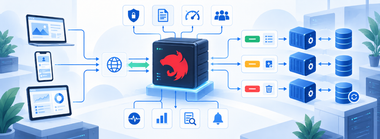
Design NestJS REST APIs with durable resource semantics, bounded validation, deterministic pagination, idempotency, concurrency control, safe errors, compatibility policy, and verified OpenAPI.
10 min read
Estimate Azure workloads across product engineering, platform work, compute, data, networking, security, environments, operations, support, commitments, and change.

10 min read
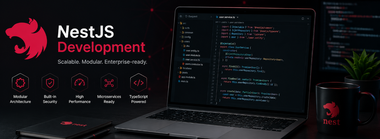
Evaluate NestJS against product complexity, team skills, security, integrations, scale, delivery pace, and operating costs before choosing it for a business backend.
9 min read