
NestJS Security Best Practices for Production Applications
- NestJS security best practices
- nestjs
- architecture
- development
NestJS security best practices should be treated as a production decision rather than a feature comparison. Start with critical user journeys, dependencies, current load, failure cost, and operational ownership. Define a measurable result and a safe rollback for every proposed change. This evidence separates the actual constraint from assumptions and prevents the team from adding complexity before it has proved the need.
NestJS Security Best Practices: Threat modeling
Evaluate threat modeling through a representative production scenario instead of a general best-practice list. Record decision boundaries, non-functional requirements, and named owners. Capture the baseline before making a change; otherwise, the team cannot show whether the decision improved reliability, delivery speed, or operating cost.
Compare at least two viable options and document the limit of each one. Review an architecture record that includes rejected alternatives. The decision must account for peak load, permissions, dependent services, and the engineers who will operate it. It should also explain how it affects the next concern: authentication and authorization.
Before rollout, verify a thin end-to-end slice for the largest assumption. Set a stopping threshold, name the person who can pause the release, and describe the state restored by rollback. Monitoring must expose the cause of failure rather than only reporting that an error occurred.
Authentication and authorization
Evaluate authentication and authorization through a representative production scenario instead of a general best-practice list. Record trust boundaries, least-privilege roles, and token lifetime. Capture the baseline before making a change; otherwise, the team cannot show whether the decision improved reliability, delivery speed, or operating cost.
Compare at least two viable options and document the limit of each one. Review managed identities, secret rotation, and resource-level authorization. The decision must account for peak load, permissions, dependent services, and the engineers who will operate it. It should also explain how it affects the next concern: validation and rate limiting.
Before rollout, verify abuse cases, audit trails, and access revocation. Set a stopping threshold, name the person who can pause the release, and describe the state restored by rollback. Monitoring must expose the cause of failure rather than only reporting that an error occurred.
If implementation needs additional capacity, NestJS development services can turn the assessment into owned work packages, acceptance criteria, and a knowledge-transfer plan.
Validation and rate limiting
Evaluate validation and rate limiting through a representative production scenario instead of a general best-practice list. Record decision boundaries, non-functional requirements, and named owners. Capture the baseline before making a change; otherwise, the team cannot show whether the decision improved reliability, delivery speed, or operating cost.
Compare at least two viable options and document the limit of each one. Review an architecture record that includes rejected alternatives. The decision must account for peak load, permissions, dependent services, and the engineers who will operate it. It should also explain how it affects the next concern: secrets and database security.
Before rollout, verify a thin end-to-end slice for the largest assumption. Set a stopping threshold, name the person who can pause the release, and describe the state restored by rollback. Monitoring must expose the cause of failure rather than only reporting that an error occurred.
Secrets and database security
Evaluate secrets and database security through a representative production scenario instead of a general best-practice list. Record schema compatibility, indexes, connection pools, and transaction boundaries. Capture the baseline before making a change; otherwise, the team cannot show whether the decision improved reliability, delivery speed, or operating cost.
Compare at least two viable options and document the limit of each one. Review replication lag, backup restoration, and recovery points. The decision must account for peak load, permissions, dependent services, and the engineers who will operate it. It should also explain how it affects the next concern: dependency vulnerabilities.
Before rollout, verify data reconciliation, cutover controls, and a tested rollback. Set a stopping threshold, name the person who can pause the release, and describe the state restored by rollback. Monitoring must expose the cause of failure rather than only reporting that an error occurred.
The related architecture guide provides more context for testing adjacent assumptions and release dependencies.
Dependency vulnerabilities
Evaluate dependency vulnerabilities through a representative production scenario instead of a general best-practice list. Record decision boundaries, non-functional requirements, and named owners. Capture the baseline before making a change; otherwise, the team cannot show whether the decision improved reliability, delivery speed, or operating cost.
Compare at least two viable options and document the limit of each one. Review an architecture record that includes rejected alternatives. The decision must account for peak load, permissions, dependent services, and the engineers who will operate it. It should also explain how it affects the next concern: safe logging.
Before rollout, verify a thin end-to-end slice for the largest assumption. Set a stopping threshold, name the person who can pause the release, and describe the state restored by rollback. Monitoring must expose the cause of failure rather than only reporting that an error occurred.
The related architecture guide provides more context for testing adjacent assumptions and release dependencies.
Safe logging
Evaluate safe logging through a representative production scenario instead of a general best-practice list. Record trace propagation, resource attributes, and service-level indicators. Capture the baseline before making a change; otherwise, the team cannot show whether the decision improved reliability, delivery speed, or operating cost.
Compare at least two viable options and document the limit of each one. Review sampling, retention, alert thresholds, and operator runbooks. The decision must account for peak load, permissions, dependent services, and the engineers who will operate it. It should also explain how it affects the next concern: deployment checklist.
Before rollout, verify correlation across browser, API, queue, and database spans. Set a stopping threshold, name the person who can pause the release, and describe the state restored by rollback. Monitoring must expose the cause of failure rather than only reporting that an error occurred.
The related architecture guide provides more context for testing adjacent assumptions and release dependencies.
Deployment checklist
Evaluate deployment checklist through a representative production scenario instead of a general best-practice list. Record decision boundaries, non-functional requirements, and named owners. Capture the baseline before making a change; otherwise, the team cannot show whether the decision improved reliability, delivery speed, or operating cost.
Compare at least two viable options and document the limit of each one. Review an architecture record that includes rejected alternatives. The decision must account for peak load, permissions, dependent services, and the engineers who will operate it. It should also explain how it affects the next concern: threat modeling.
Before rollout, verify a thin end-to-end slice for the largest assumption. Set a stopping threshold, name the person who can pause the release, and describe the state restored by rollback. Monitoring must expose the cause of failure rather than only reporting that an error occurred.
When You May Need External Development Expertise
An independent review of NestJS security best practices is useful when a change crosses application code, data, and cloud infrastructure, or when the team lacks recent experience with a similar workload. A useful assessment should return prioritized risks, viable options, an implementation sequence, acceptance criteria, and a clear knowledge-transfer plan.
- Decision 1: For threat modeling, record the baseline, target, owner, failure scenario, and rollback action.
- Decision 2: For authentication and authorization, record the baseline, target, owner, failure scenario, and rollback action.
- Decision 3: For validation and rate limiting, record the baseline, target, owner, failure scenario, and rollback action.
- Decision 4: For secrets and database security, record the baseline, target, owner, failure scenario, and rollback action.
- Decision 5: For dependency vulnerabilities, record the baseline, target, owner, failure scenario, and rollback action.
- Decision 6: For safe logging, record the baseline, target, owner, failure scenario, and rollback action.
How should a team validate threat modeling?
How should a team validate threat modeling?
How should a team validate authentication and authorization?
How should a team validate authentication and authorization?
How should a team validate validation and rate limiting?
How should a team validate validation and rate limiting?
How should a team validate secrets and database security?
How should a team validate secrets and database security?
How should a team validate dependency vulnerabilities?
How should a team validate dependency vulnerabilities?
Harden Your NestJS Application Before Production
Share your authentication flows, authorization model, deployment topology and recent security findings. GARNO.TECH will produce a prioritized threat-led remediation plan with accountable owners, verification evidence and release gates for the highest-risk controls.
Publications
Our research
Research and development of AI-powered solutions to optimize business workflows and enhance decision-making processes.
Analysis of machine learning models for predictive analytics in finance, e-commerce, and SaaS platforms.
Exploration of natural language processing and computer vision technologies to strengthen automation, personalization, and customer support.
External CTO Leadership for FinTech Products
Structure external technology leadership around regulated data, provider dependencies, resilience and accountable product delivery.

13 min read
08 Sep 2026
Azure Cloud Implementation: Migration Checklist and Common Mistakes
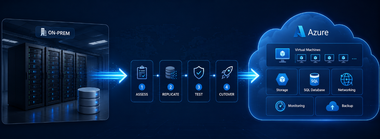
A practical checklist for planning Azure migration, reducing operational risks, protecting data, controlling costs, and avoiding common implementation mistakes.
8 min read
04 Aug 2026
NestJS Event Driven Architecture: A Production Guide
Design reliable domain events, queues, retries and observability without turning distributed workflows into hidden coupling.

7 min read
08 Sep 2026